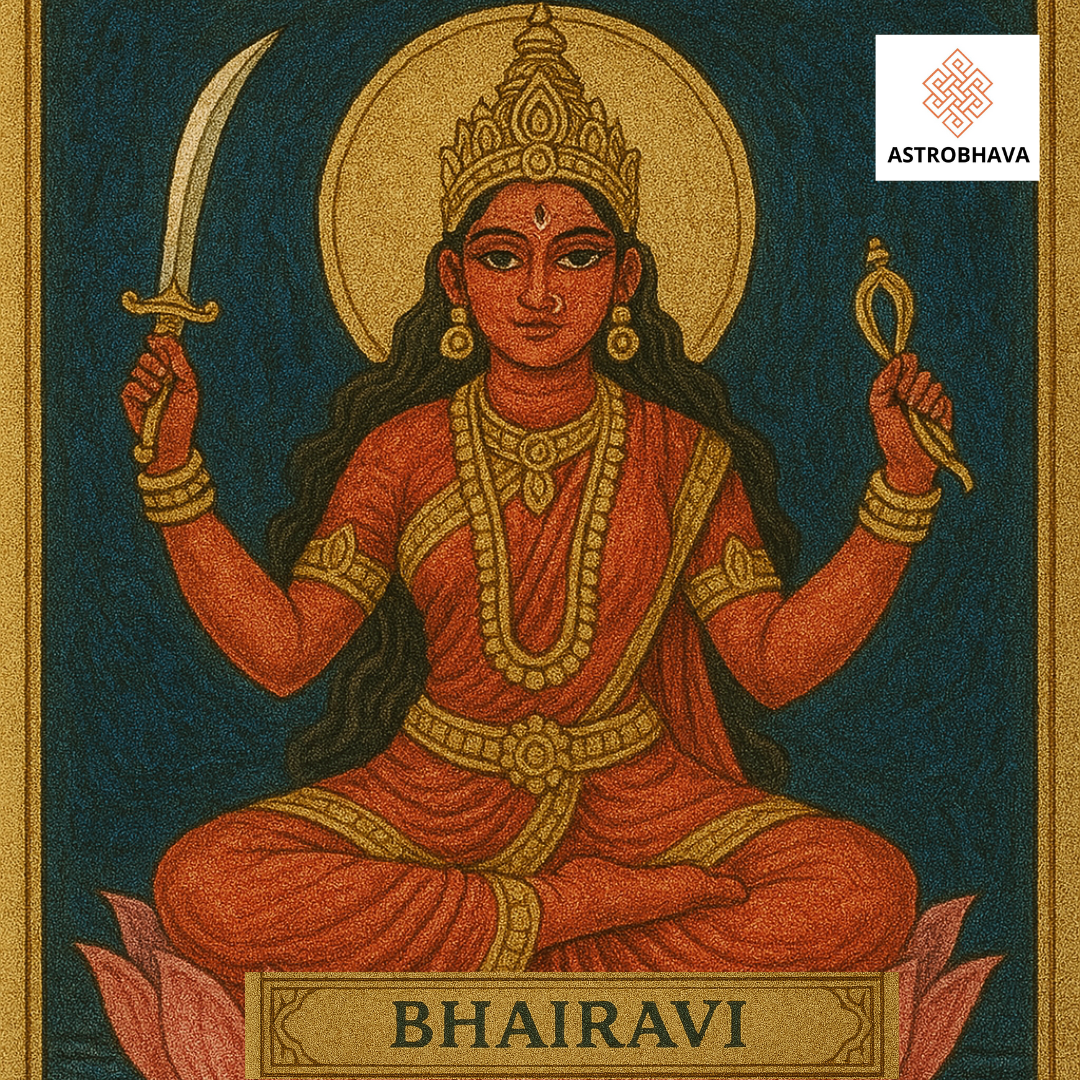
Sathru Samhara Homa is the fire rite for obstruction that has a face. In business, resistance rarely arrives as bad luck alone. It arrives as the undercutting competitor, the file that never moves, the partner who turns cold after the handshake, the tender lost without reason. The tradition calls that pressure sathru — not only a person, but every force set against your rightful effort. The homa is offered to have that pressure dissolved in fire rather than fought in kind.
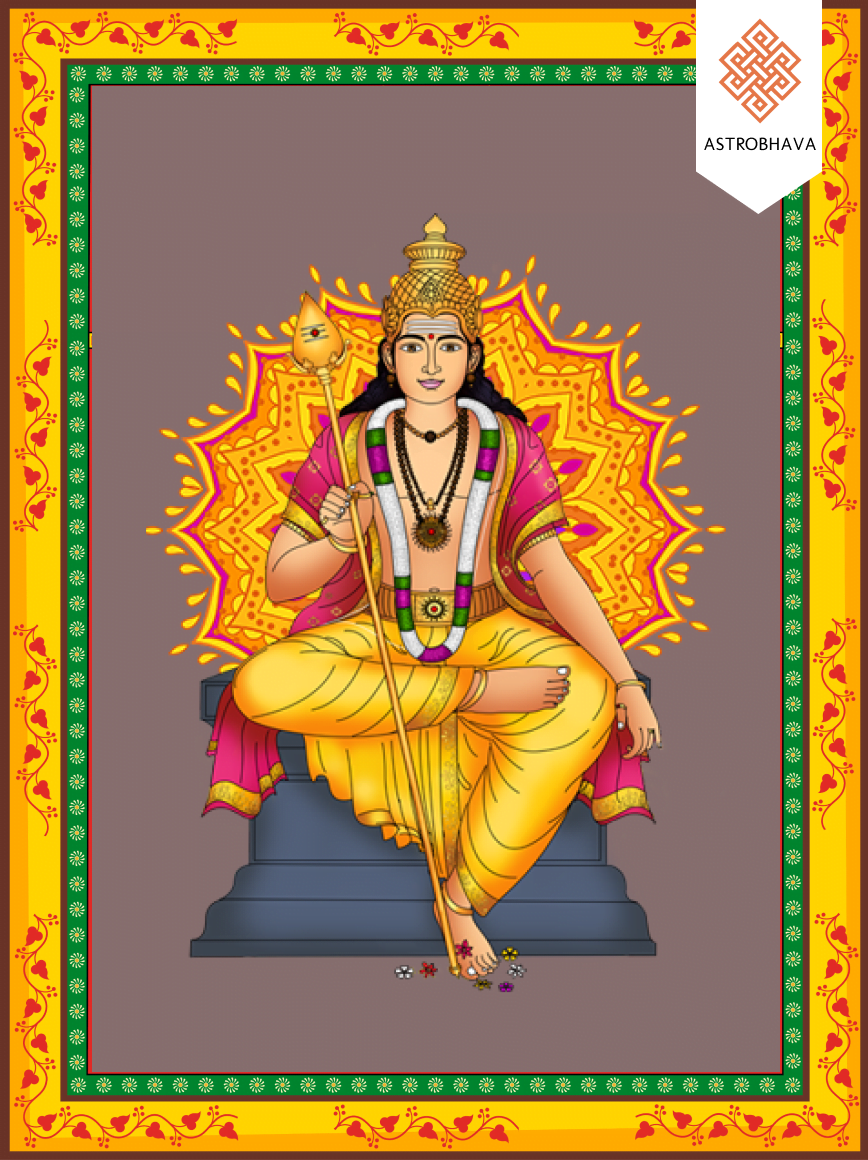
In the Agamic reading, Subramanya is the commander who ends a siege. His vel, the spear of discrimination, does not wound the innocent; it cuts the knot. So the sathru samhara pooja is not a curse and never framed as one. Priests offer ghee, rakta chandana, black sesame and specific samit into the kunda while the sathru samhara homa mantra is chanted with count, asking that hostility lose its grip, that your name be cleared where it was clouded, and that the road to new ventures open. What is turned back is the obstruction, not the human being.
ॐ तत्पुरुषाय विद्महे महासेनाय धीमहि। तन्नो षण्मुखः प्रचोदयात्॥ We seek to know that Supreme One, we meditate upon the great commander of the celestial army; may the six-faced Lord awaken and guide our thought.
Why Devotees Book This
Devotees turn to this homa when growth has stopped feeling like a market problem and started feeling personal. Here is what the tradition prescribes it for.
Rivalry that has turned personal
Offered when a competitor's moves feel targeted — pricing wars, poached staff, reputation chipped away in your own trade circle.
Deals that stall at the last step
For contracts that reach signature and stop, approvals that circle back, and negotiations that quietly go silent.
New openings after a dry stretch
Sought by founders and traders who have done the work but see no fresh enquiry, no new territory, no next order.
Clearing your name in the market
Prescribed where rumour, a spoiled reference or an old dispute is costing you trust with clients and lenders.
Steadiness inside the firm
Offered for teams strained by internal factions, leaked information and quiet sabotage of good decisions.
Courage to expand again
The vel is invoked for clarity and nerve — the resolve to launch, to bid, to enter the room and ask.
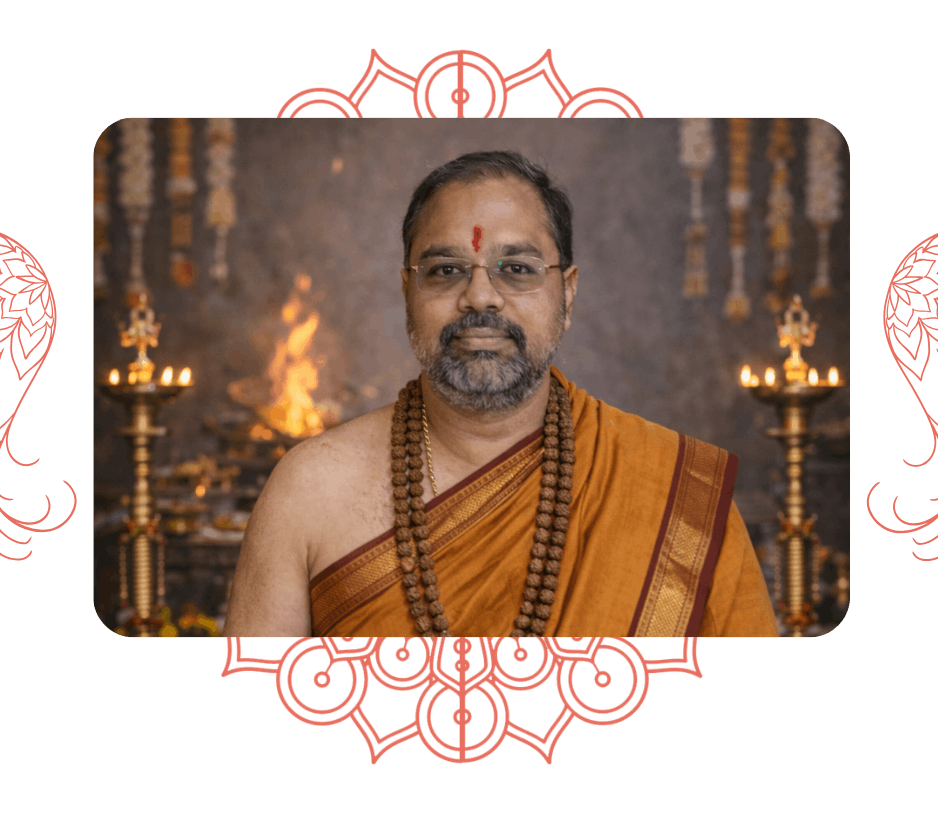
Brahmashree ShivaayaGuru, Head of Astrological & Spiritual Solutions
Who performs your homa
Under the guidance of Brahmashree Shivaaya
Every priest who performs your Sathru Samhara Homa is trained in a traditional Padashala and personally recruited by Brahmashree Shivaaya — Guru and Head of Astrological & Spiritual Solutions at AstroBhava. Your ritual is conducted at our own Yagna Ashram — never a rented venue — with temple rites performed across our seven temples in Tamil Nadu and Kerala.
Step 2 Enhance with the 48-Day Anushthan? (optional)
* Copper yantra plate approx. 1–2 inches, rolled and sealed inside a silver amulet approx. 2–4 inches. Sizes are approximate and the amulet's design varies between supplier batches — shape, metal and consecration remain the same.
Your packageTrayi Sathru Samhara Homa3 Priests + Free Yantra
—
All prices are all-inclusive — no shipping charges, no additions at checkout. See everything included →
1
You book — and send birth details at checkout.
2
Within 24–48 working hours — your muhurta is confirmed by email.
3
The day before — your telecast link arrives by email.
4
After the homa — tracking email with your personal time to wear the yantra.
Sacred Timing
Our priests fix the muhurat from your birth details and the running panchanga. These are the windows the tradition favours for this rite.
Krittika nakshatra
Subramanya's own star, ruled by Agni. The classic day for Skanda homas asking that obstruction be burned clean.
Shashti tithi and Skanda Sashti
The sixth lunar day is sacred to the Lord who ended a long war. Skanda Sashti in Kartika is the most sought window of the year.
Tuesday, in Mars' hour
Mangala's day carries the temperament of contest and courage — favoured when the matter is competition, tender or dispute.
Before you commit
Devotees also book ahead of a bid submission, a new branch opening, a partnership signing or a hearing date, so the ground is prepared first.
Every package, and the 48-day option
What you receive
The sealing of the yantra
When your homa concludes, the yantra that stood in the fire is rolled and locked inside its silver amulet according to Agama vidhi — the practice by which the energies raised in a ritual are held within a consecrated object rather than dispersing. It is why a homa performed at our ashram can still reach a devotee ten thousand miles away: what the fire raised travels to you, sealed.
Personal sankalpa
Your name, gotra & nakshatra — for you and up to five family members.
Live telecast
Watch your own homa in real time from the ashram. Streamed openly on our YouTube channel by default — or request a private, unlisted telecast at checkout.
Free energised Subramanya Yantra, sealed in a silver amulet
Consecrated over three days — Jala (holy-water consecration with mantras), Prana (life force through pranayama & chants) and Jeeva Pratishta (awakened with 108 recitations & offerings) — then present through your homa, receiving the energies raised in the fire. Immediately afterwards it is rolled and sealed inside a silver amulet by Agamic rite, locking those energies within, and shipped to you with your prasadam.
Prasadam, shipped free
Sacred vibhuti, sandalwood powder & kumkum from your fire — delivered to any country.
48-Day Anushthan (optional)
Daily temple worship for 48 days — the 27 Nakshatras + 12 Rashis + 9 Planets — then sealed in a silver amulet of approximately 2–4 inches.
A note on sacred tradition
As per strict Agama vidhi, no videography is permitted inside the temple sanctum — this preserves the pure sacred energies and undisturbed divine focus of the ritual. The main homa is respectfully telecast live from outside the sanctum; the daily rituals of the 48-day Anushthan are performed with full devotion but are not telecast.
Homas are telecast openly on our YouTube channel so that devotees everywhere may witness the rituals — and because we believe you should be able to see our work before you trust us with yours. Your sankalpa names you and your family, so if you would rather your ceremony were not public, choose the private telecast option at checkout and it is streamed as an unlisted link visible only to you.
We state this plainly — transparency about what tradition forbids filming, and about what is public, is part of performing these rituals honestly.
After it arrives
How to wear your energised Subramanya Yantra
The energised yantra is carefully rolled and sealed inside a sacred silver amulet before shipping. Wearing it is itself a small ritual — and even its timing is set for you personally.
01
Your auspicious time to wear it
Our astrologer marks the auspicious date and time to wear the yantra according to your birth details — sent to you in the email carrying your shipment's tracking number.
02
Purify the amulet
Dip the silver amulet in raw milk or Ganga jal for an hour before wearing, then clean with normal water.
03
Face East or North
Perform the wearing process facing east or north for maximum benefit.
04
Offer dheep & dhoop
Show lamp and incense to the amulet before wearing it.
05
Wear it
Around your neck or waist, on a thread or chain.
06
Keep the energy intact
Repeated offering of dheep and dhoop keeps the energisation alive.
07
If you prefer not to wear it
Place the amulet at your puja altar, or keep it in your wallet.
Inside the fire ritual
How your Sathru Samhara Homa is performed
01
Sankalpa
The priest states your name, gotra and nakshatra — and those of up to five family members — with the intention this homa is performed for.
02
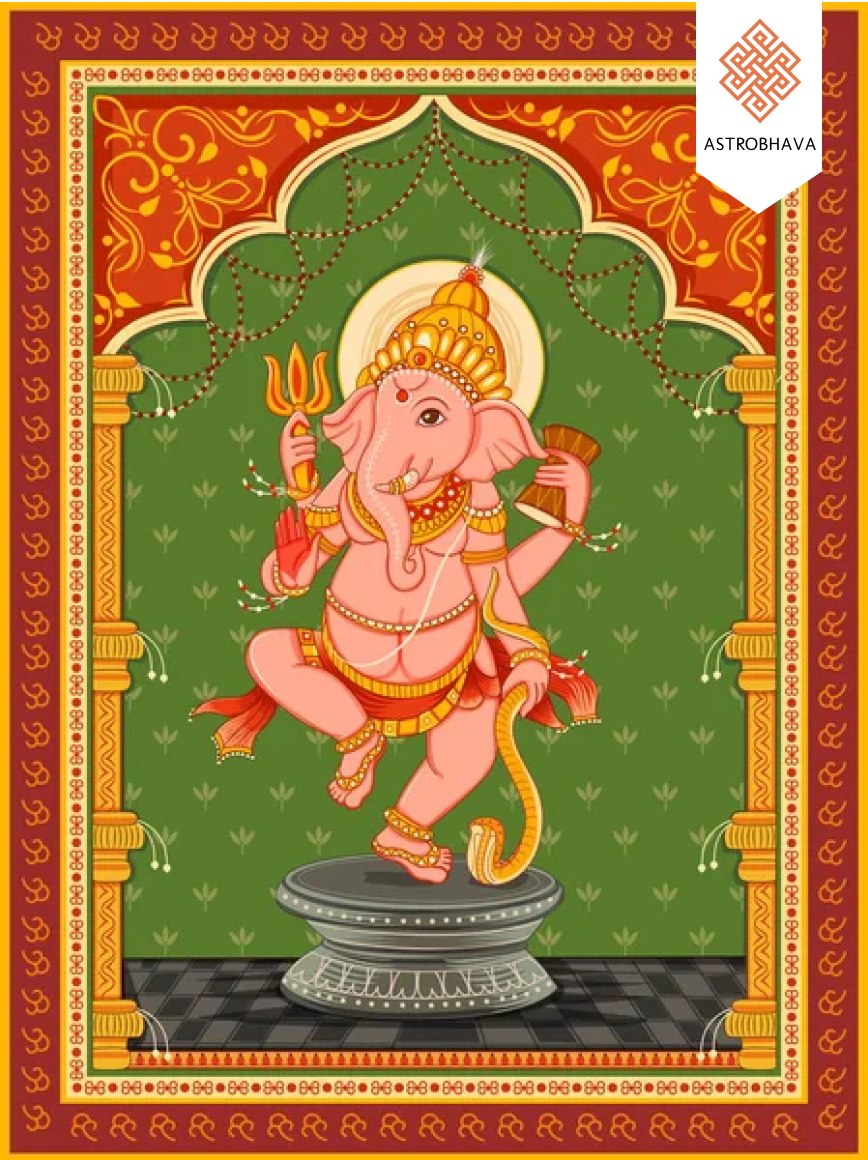
Ganapati Puja
The customary invocation to Ganapati, clearing obstacles before the goddess is approached.
03
Agni Pratishtha
The fire is consecrated in the homa kunda and Agni invoked as the carrier of every offering that follows.
04
Subramanya Avahana
The Subramanya Sukta and Subramanya Gayatri are chanted, inviting the goddess's presence into the fire — by one, three or five priests as your package sets.
05
Ahuti
Ghee, white flowers, akshata and honey are offered in sequence with mantra — the offerings traditional to her worship.
06
Purnahuti
The final complete offering seals the sankalpa stated at the opening.
07
Aarti & Dispatch
Aarti is performed live on your telecast. Vibhuti, sandalwood powder, kumkum and your energised yantra are then packed and shipped free to your door.
Who is invoked
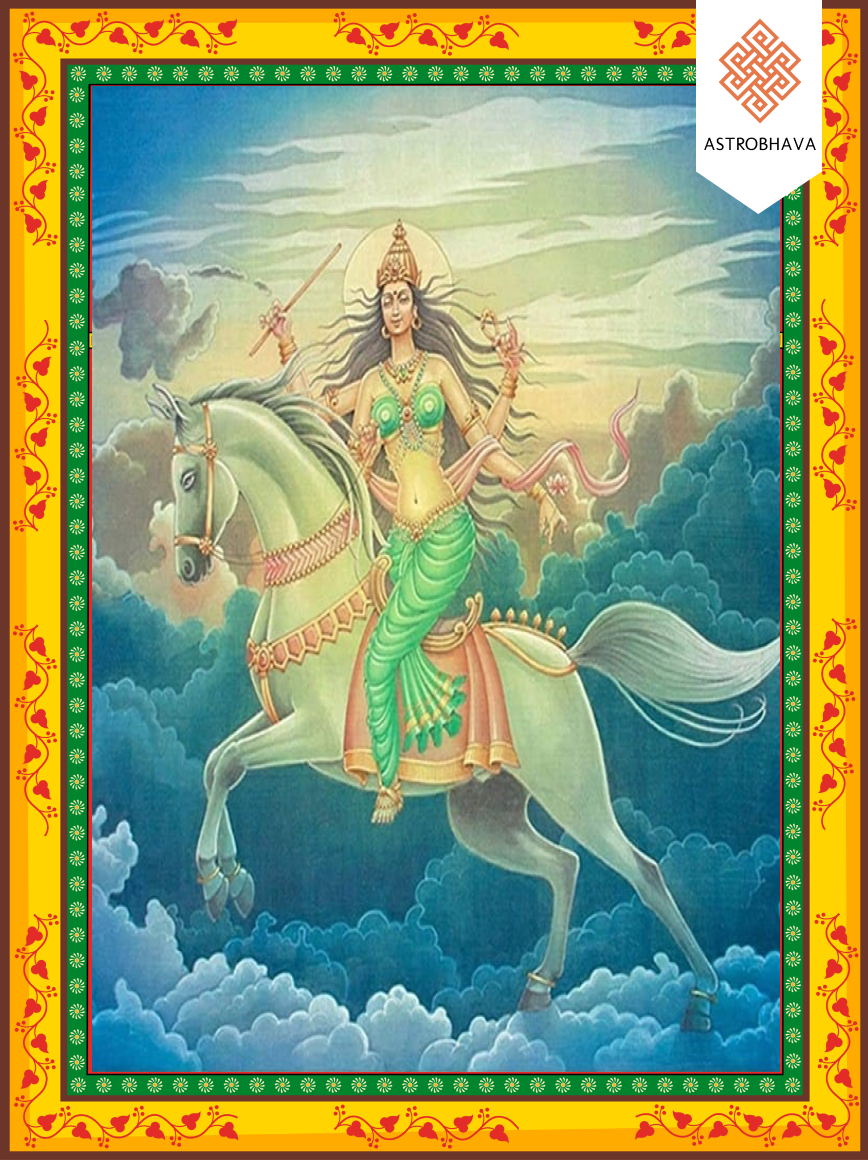
Subramanya — the goddess of knowledge itself
Subramanya is one of the Tridevi and the mother of the Vedas — the presiding deity of knowledge, learning, memory, speech, music and every art. She is depicted in white upon a white lotus, holding the veena, a book, a rosary and a water pot, with the swan of discernment beside her.
In this homa, her grace — Subramanya Kataksham — is invoked through fire with your own name and birth details spoken in the sankalpa.
Sarathi, our free AI ritual guide, recommends the traditional ritual for your situation instantly. For a full reading of your chart, book a live session with our astrologers — the fee is fully credited when you book any ritual.
Shatru Samhara Homam is a Vedic fire ritual offered to have hostility, obstruction and unfair opposition dissolved. Subramanya is invoked as the commander who lifts a siege. Priests offer ghee, black sesame, rakta chandana and prescribed samit into the kunda with a counted recitation of the sathru samhara homa mantra. It is prayed for protection and open passage — never for harm to any person.
Treat a homa as a guest of the highest order. Clean the space, bathe before you sit, keep footwear and leather away, and keep the flame between you and the offerings. Sit facing east, keep speech and thought quiet, and do not step over the kunda or turn your back to it. When you book with AstroBhava the fire is tended by our priests at the Yagna Ashram; at home you simply watch the live telecast with the same attentiveness.
A householder homa needs a consecrated kunda or a clean copper vessel of sand, samit wood, cow ghee, a spoon and ladle, and a priest who knows the sequence and the mantra count. Sankalpa, Ganapati puja, agni pratishtha, the deity's ahutis and purnahuti must follow in order. A rite like Sathru Samhara Homa, with its specific dravya and pronunciation, is traditionally left to trained ritualists — which is why devotees have it performed on their behalf and receive the prasadam.
For the home itself, Ganapati Homa is offered before anything new, Sudarshana Homa for protection of the dwelling, Navagraha Homa for household peace, and Markandeya homa benefits are sought for longevity and the wellbeing of family members. Sathru Samhara Homa belongs to a different need — it is for the enterprise you run and the opposition it meets, not for domestic ritual routine.
For marriage the tradition turns to Swayamvara Parvathi Homa for a suitable alliance, Uma Maheswara Homa for harmony between spouses, and Kalyana Utsavam styled rites for delayed wedding prospects. Sathru Samhara Homa is not a marriage rite, though families sometimes book it separately when a good match is being obstructed by outside interference.
Fix the muhurat, arrange a clean east-facing corner, keep the samagri ready, and let a qualified priest conduct sankalpa, invocation, ahutis and purnahuti in sequence. Fast lightly, wear unstitched or fresh cotton, and stay present through the fire. With AstroBhava you do none of the arranging — priests perform the full vidhi at our Yagna Ashram in your name and it is streamed live wherever you are.
It is the fire rite for opposition that has become an obstacle to livelihood. Its significance lies in the method: instead of retaliating, you place the hostility into Agni and ask Subramanya's vel to cut the knot. Traders, founders and professionals book it when growth has stopped for reasons that feel deliberate rather than accidental.
The tradition prescribes it for release from targeted rivalry, movement in stalled deals and approvals, fresh business openings, restoration of reputation in your market, and steadiness within your own team. Subramanya homam benefits are also described in the texts as courage, clarity of decision and freedom from fear — the inner ground on which any venture is rebuilt.
Anyone facing sustained, unfair opposition in business — a proprietor losing ground to undercutting, a firm caught in a long dispute, a professional whose name has been clouded, a family enterprise strained by internal factions. It is also booked before a major bid, expansion or negotiation. The rite itself is performed by our qualified priests on your behalf; you are named in the sankalpa.
Krittika nakshatra, Shashti tithi, Tuesdays and Skanda Sashti are the favoured windows. Vishakha and Mrigashira are also used. Our priests match your birth details and current planetary period to the panchanga and confirm the muhurat with you after booking, so the fire is lit at the hour the tradition prefers.
The priests begin with achamana, punyaha vachana and sankalpa in your name and gotra, then Ganapati puja and kalasha sthapana. Agni is established in the kunda, Subramanya is invoked, and the sathru samhara homa mantra is offered with the prescribed count. Samagri includes cow ghee, black sesame, rakta chandana, mustard, navadhanya, dry fruits, camphor and specific samit. The rite closes with purnahuti, rakshabandhana and Vedic ashirvada. Prasadam and an energised yantra are then couriered to you.
Choose your package on this page, share the names, gotra and birth details of the participants, and note the concern you want placed in the sankalpa. We confirm the muhurat, send you the live telecast link so you can watch from any country, and courier the prasadam and energised yantra to your address at no extra cost. The homa is performed by our priests at AstroBhava's Yagna Ashram — you do not need to travel.