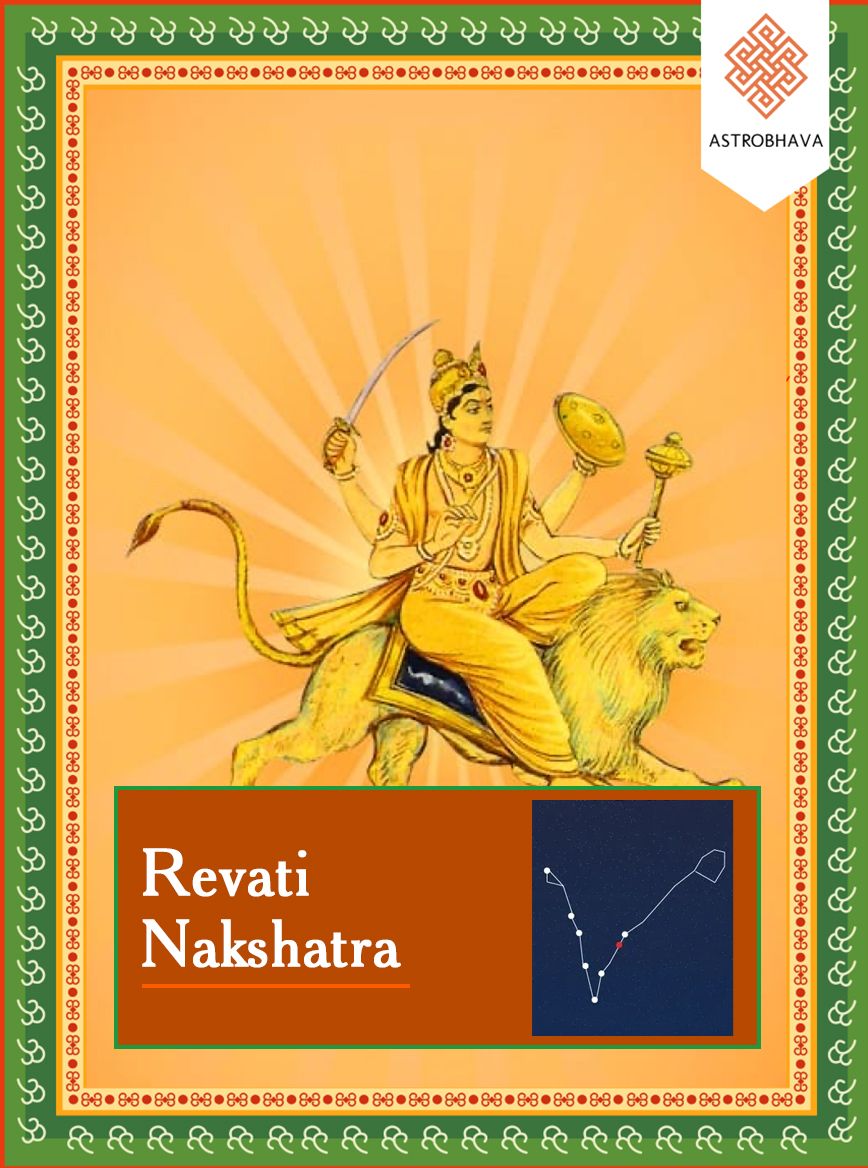
Revati is the twenty-eighth and last nakshatra, the closing gate of the zodiac. Its symbol is a fish swimming in the sea, and a drum that marks the end of a journey. The tradition holds that whatever begins under Revati is carried gently to its finish. When you are born under this star, its rhythm runs through your whole chart — through your travels, your health, your dealings with animals and children, your instinct to look after people. The Revati Nakshatra Homa is the fire rite that honours that rhythm and asks Pushan, the star's guardian, to walk the road with you.
Nakshatra homas are not performed to change a star. They are performed to align you with the one you were given. A birth star has seasons; when its lord is weak by transit, when Mercury is afflicted, when a dasha turns, devotees light the fire for it. Priests at our Yagna Ashram in Coimbatore kindle the agni, recite the Revati portion of the Nakshatra Suktam with your name and gotra, and offer ghee, samidha and grains through the count of oblations. You watch it live from wherever you are. The prasadam and an energised yantra reach your door afterwards.
पूषा रेवत्यन्वेति पन्थां पुष्टिपती पशुपा वाजबस्त्यौ ।
इमानि हव्या प्रयता जुषाणा सुगैर्नो यानैरुपयातां यज्ञम् ॥
ॐ पूष्णे नमः । Pushan, lord of nourishment and keeper of the herds, travels the path together with Revati; may they receive these offerings gladly and come to our sacrifice by easy roads.
Why Devotees Book This
Devotees whose birth star is Revati, or whose children were born under it, turn to this homa at the turns of life. Here is what the tradition prescribes it for.
Strength for your birth star
The rite is offered to steady the Revati padam in your chart, especially when Mercury, its lord, is passing through a difficult transit or dasha.
Protection on the road
Pushan is invoked in the Veda as the guardian of paths. Devotees who travel often, relocate, or send children abroad offer this homa before the journey begins.
Nourishment and household plenty
Pushan is the nourisher — of cattle, grain and family. The oblations are made seeking steady sustenance rather than sudden gain.
A clean finish to what you started
Revati closes the zodiac. The homa is traditionally offered when a long project, a course of study, a treatment or a legal matter is nearing its end.
Calm for a sensitive nature
Revati-born people are often described as tender-hearted and easily unsettled. The fire rite is sought for inner steadiness and clarity of mind.
Blessing for a Revati-born child
Parents book the homam on a child's nakshatra birthday, asking for the star's protection over the year ahead.
Brahmashree ShivaayaGuru, Head of Astrological & Spiritual Solutions
Who performs your homa
Under the guidance of Brahmashree Shivaaya
Every priest who performs your Revati Nakshatra Homa is trained in a traditional Padashala and personally recruited by Brahmashree Shivaaya — Guru and Head of Astrological & Spiritual Solutions at AstroBhava. Your ritual is conducted at our own Yagna Ashram — never a rented venue — with temple rites performed across our seven temples in Tamil Nadu and Kerala.
Meet our priests →
Certified Vedic priests — trained in traditional Padashalas
100% Agama Vidhi — as prescribed in the scriptures
Individual, never group — one ritual, one devotee's sankalpa
Muhurta from your chart — date fixed to your birth details
Step 2 Enhance with the 48-Day Anushthan? (optional)
* Copper yantra plate approx. 1–2 inches, rolled and sealed inside a silver amulet approx. 2–4 inches. Sizes are approximate and the amulet's design varies between supplier batches — shape, metal and consecration remain the same.
Your packageTrayi Revati Nakshatra Homa3 Priests + Free Yantra
—
All prices are all-inclusive — no shipping charges, no additions at checkout. See everything included →
1
You book — and send birth details at checkout.
2
Within 24–48 working hours — your muhurta is confirmed by email.
3
The day before — your telecast link arrives by email.
4
After the homa — tracking email with your personal time to wear the yantra.
Sacred Timing
Any day serves when need is urgent, but the tradition marks certain windows as especially fit for the Revati Nakshatra Homam.
The day the Moon transits Revati
Once each lunar month the Moon returns to your star. This is the classic day for the rite, and the one our priests will suggest first.
Your nakshatra birthday
The Revati day in your birth month, counted by the Moon rather than the calendar, is offered for the year ahead — for children especially.
Panguni and Meena Sankranti
Revati falls wholly in Pisces. The solar month of Meena, and the Tamil month Panguni, are held auspicious for honouring this star.
Wednesdays and Brahma muhurta
Mercury rules Revati, so Wednesday carries the rite well. The oblations are begun in the pre-dawn hours, when the ashram is quiet and the fire takes cleanly.
Every package, and the 48-day option
What you receive
The sealing of the yantra
When your homa concludes, the yantra that stood in the fire is rolled and locked inside its silver amulet according to Agama vidhi — the practice by which the energies raised in a ritual are held within a consecrated object rather than dispersing. It is why a homa performed at our ashram can still reach a devotee ten thousand miles away: what the fire raised travels to you, sealed.
Personal sankalpa
Your name, gotra & nakshatra — for you and up to five family members.
Live telecast
Watch your own homa in real time from the ashram. Streamed openly on our YouTube channel by default — or request a private, unlisted telecast at checkout.
Free energised Pushan Yantra, sealed in a silver amulet
Consecrated over three days — Jala (holy-water consecration with mantras), Prana (life force through pranayama & chants) and Jeeva Pratishta (awakened with 108 recitations & offerings) — then present through your homa, receiving the energies raised in the fire. Immediately afterwards it is rolled and sealed inside a silver amulet by Agamic rite, locking those energies within, and shipped to you with your prasadam.
Prasadam, shipped free
Sacred vibhuti, sandalwood powder & kumkum from your fire — delivered to any country.
48-Day Anushthan (optional)
Daily temple worship for 48 days — the 27 Nakshatras + 12 Rashis + 9 Planets — then sealed in a silver amulet of approximately 2–4 inches.
A note on sacred tradition
As per strict Agama vidhi, no videography is permitted inside the temple sanctum — this preserves the pure sacred energies and undisturbed divine focus of the ritual. The main homa is respectfully telecast live from outside the sanctum; the daily rituals of the 48-day Anushthan are performed with full devotion but are not telecast.
Homas are telecast openly on our YouTube channel so that devotees everywhere may witness the rituals — and because we believe you should be able to see our work before you trust us with yours. Your sankalpa names you and your family, so if you would rather your ceremony were not public, choose the private telecast option at checkout and it is streamed as an unlisted link visible only to you.
We state this plainly — transparency about what tradition forbids filming, and about what is public, is part of performing these rituals honestly.
After it arrives
How to wear your energised Pushan Yantra
The energised yantra is carefully rolled and sealed inside a sacred silver amulet before shipping. Wearing it is itself a small ritual — and even its timing is set for you personally.
01
Your auspicious time to wear it
Our astrologer marks the auspicious date and time to wear the yantra according to your birth details — sent to you in the email carrying your shipment's tracking number.
02
Purify the amulet
Dip the silver amulet in raw milk or Ganga jal for an hour before wearing, then clean with normal water.
03
Face East or North
Perform the wearing process facing east or north for maximum benefit.
04
Offer dheep & dhoop
Show lamp and incense to the amulet before wearing it.
05
Wear it
Around your neck or waist, on a thread or chain.
06
Keep the energy intact
Repeated offering of dheep and dhoop keeps the energisation alive.
07
If you prefer not to wear it
Place the amulet at your puja altar, or keep it in your wallet.
Inside the fire ritual
How your Revati Nakshatra Homa is performed
01
Sankalpa
The priest states your name, gotra and nakshatra — and those of up to five family members — with the intention this homa is performed for.
02
Ganapati Puja
The customary invocation to Ganapati, clearing obstacles before the goddess is approached.
03
Agni Pratishtha
The fire is consecrated in the homa kunda and Agni invoked as the carrier of every offering that follows.
04
Pushan Avahana
The Pushan Sukta and Pushan Gayatri are chanted, inviting the goddess's presence into the fire — by one, three or five priests as your package sets.
05
Ahuti
Ghee, white flowers, akshata and honey are offered in sequence with mantra — the offerings traditional to her worship.
06
Purnahuti
The final complete offering seals the sankalpa stated at the opening.
07
Aarti & Dispatch
Aarti is performed live on your telecast. Vibhuti, sandalwood powder, kumkum and your energised yantra are then packed and shipped free to your door.
Not sure this is the right homa?
Ask before you book — free, or credited
Sarathi, our free AI ritual guide, recommends the traditional ritual for your situation instantly. For a full reading of your chart, book a live session with our astrologers — the fee is fully credited when you book any ritual.
Yes. Revati is counted among the gentle and auspicious nakshatras. Classical texts describe it as soft, kind and well-suited to beginnings that need a smooth ending. Like every star it has strong and testing phases, which depend on the Moon, on Mercury as its lord, and on the running dasha — not on the star itself. The homa is offered to keep you in tune with it through both.
Revati is the twenty-eighth and final nakshatra of the zodiac, spread across the last portion of Pisces (Meena). Its lord is Mercury, its presiding deity is Pushan, and its symbol is a fish, sometimes shown as a drum. Its nature is described as mridu — soft. It governs completion, nourishment, journeys and safe arrival.
Revati does not "produce" a god so much as belong to one. Its presiding deity is Pushan, a solar deity of the Rig Veda who guides travellers, protects herds and feeds the household. It is Pushan who is invoked by name in the Revati Nakshatra Homa.
The deity associated with this star is Pushan, the nourisher and guardian of paths. In popular telling, Revati is also linked with the closing of the zodiac and with the goddess Revati of the Puranas, but the Vedic invocation in the homa is addressed to Pushan.
Traditional accounts do not fix a single avatar's birth to Revati. What the tradition is clear about is the star's ruling deity — Pushan — and the mantra given to him in the Nakshatra Suktam, which our priests recite through the oblations of this homam.
It is regarded as auspicious. Revati is classed as a mridu (tender) and dhruva-adjacent star, favoured for travel, for beginning journeys, for marriage-related rites and for acts of charity. Muhurta texts count Revati among the good nakshatras for setting out on a road.
Yes. A birth under Revati is considered fortunate, and no nakshatra is inauspicious in itself. Children born under it are traditionally described as gentle, well-liked and caring. Where the last pada or a specific gandanta point is involved, families often choose to offer this homa as a customary blessing at the outset — an act of care, not a correction of any fault.
It is a Vedic fire ritual dedicated to Revati Nakshatra and its deity Pushan, performed for a person born under that star. Its significance lies in alignment: the star that held the Moon at your birth continues to shape your temperament and your timing, and the homa renews your connection to it. Ghee, samidha, grains and herbs are offered into the agni with the Revati mantra and your sankalpa.
The tradition prescribes it for protection on journeys, steady nourishment in the home, calm for a sensitive mind, the smooth completion of long undertakings, and the strengthening of Mercury's influence in your chart. It is also offered as an annual blessing on a Revati-born child's nakshatra birthday. Scriptural intent is described here; no outcome is promised.
Anyone born with the Moon in Revati, and parents on behalf of a Revati-born child. It is also taken up during a Mercury dasha or bhukti, before a long relocation or foreign travel, and at the closing stage of a demanding project. At AstroBhava the rite itself is performed by our qualified priests on your behalf — you do not need to be present.
The day the Moon transits Revati each month is the ideal window, and your own nakshatra birthday is the strongest of these. Wednesdays, the solar month of Meena, and the pre-dawn Brahma muhurta are also favoured. Tell us your birth details when you book and our priests will fix the muhurat for you.
The priests begin with achamana, Ganapati puja and punyahavachana, then take the sankalpa in your name, gotra and nakshatra. The kunda is prepared and agni invoked with Agni-mukha. Pushan and the Revati devata are installed and worshipped. The Revati verse of the Nakshatra Suktam is recited through the prescribed count of ahutis, with cow ghee, palasha and other samidha, navadhanya, rice, honey, herbs and flowers. Purnahuti, aarti and Vedic ashirvada close the rite. You watch the whole sequence on the live telecast; prasadam and an energised yantra are then couriered to you.
Book online from any country on this page. Give your name, gotra if you know it, and birth details. Our team confirms the muhurat and sends you the live telecast link, so you can sit with the fire from home. Afterwards the prasadam and yantra travel to your address by courier, free of shipping cost, wherever you are.