In Devanagari, Tamil, Telugu, Kannada, Malayalam and English — with the meaning of every word, and the one syllable most people pronounce wrongly.
Who Venkateswara is
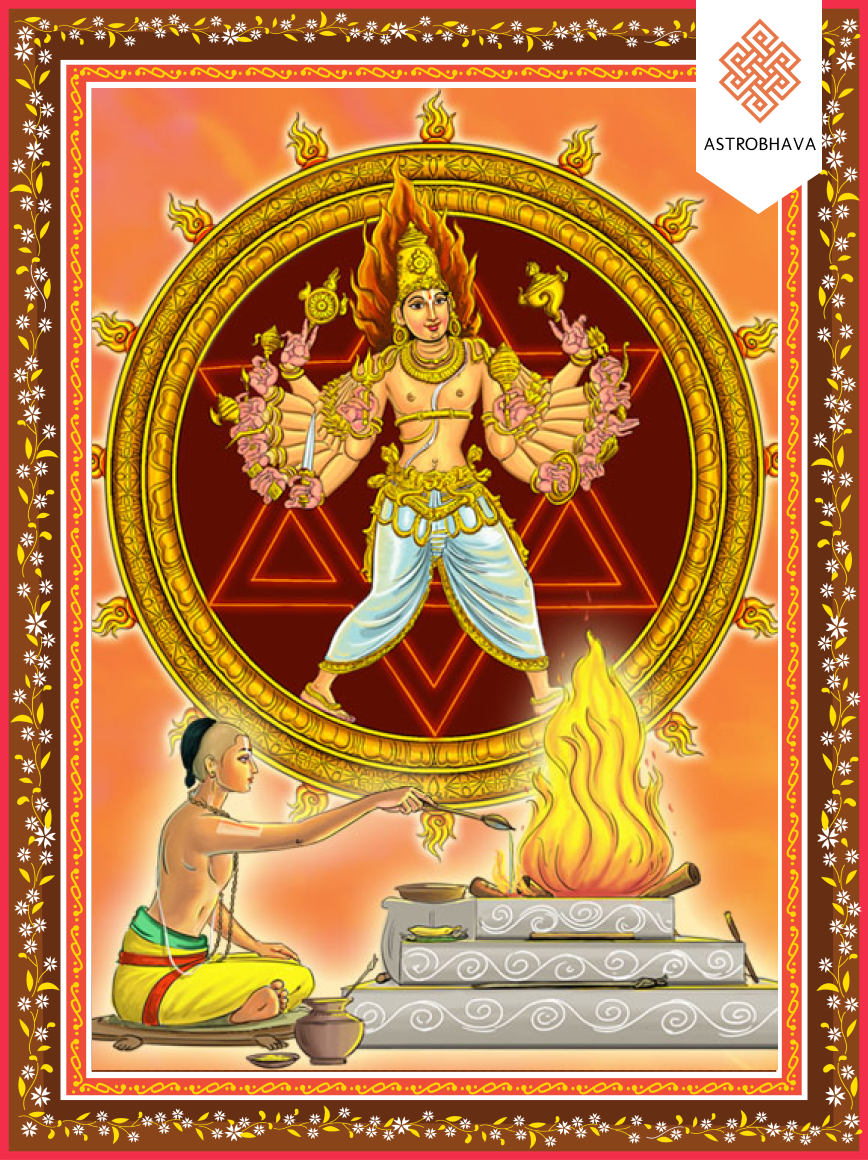
Venkateswara, also called Srinivasa and Balaji, is the self-manifested standing form of Vishnu who abides permanently on the seventh peak of the Venkata hill in Tirumala. Distinct from other Vishnu images by the large white namam that covers his eyes, the discus and conch held in the upper hands, and the lower right hand pointed toward his feet, he is further marked by the eternal presence of the goddess Lakshmi on his chest and the subtle scar that tradition links to the debt owed to Kubera. The name Venkateswara itself means the Lord of Venkata, binding the deity inseparably to that single hill. Pilgrims and poets of the Sri Vaishnava lineage address him as the one who remains accessible throughout the Kali age when other archa forms have withdrawn, a claim made uniquely for this hill-top presence.
The Debt on the Hill
The Venkatachala Mahatmya, embedded within the Varaha and Skanda Puranas, narrates that Vishnu, after recovering the earth as Varaha, chose to reside on the Venkata hill in order to bless the beings of the Kali age. Assuming the form of Srinivasa, he encountered the princess Padmavati, incarnation of Lakshmi, and sought her hand. To meet the expenses of the wedding he borrowed an immense sum from Kubera, pledging that the debt would be repaid through the offerings of devotees across the centuries. The same text records that the sage Bhrigu once struck Vishnu’s chest, leaving a permanent mark, and that the Lord thereafter stood motionless on the hill, eyes half-closed beneath the namam, receiving the continuous stream of pilgrims whose gifts slowly discharge the ancient loan. No other avatar or archa form carries this precise narrative of indebtedness and immovable residence.
The mantra, in six scripts
The seed mantra, and the form most devotees chant daily. No initiation is required — it is open to anyone, including a parent chanting for a child.
DevanagariSanskrit & Hindiॐ नमो वेङ्कटेशाय
Tamilௐ நமோ வேங்கடேஶாய
Teluguఓం నమో వేఙ్కటేశాయ
Kannadaಓಂ ನಮೋ ವೇಙ್ಕಟೇಶಾಯ
Malayalamഓം നമോ വേങ്കടേശായ
EnglishRoman transliterationoṃ namo veṅkaṭeśāya
“Om, salutation to Veṅkaṭeśa”
ॐ
oṃ — Om
नमो
namo — salutation to
वेङ्कटेशाय
veṅkaṭeśāya — Veṅkaṭeśa
Aim is the mantra, in a sense. The rest is address and salutation; the seed syllable carries the goddess. Where a practitioner has been given a very short practice, it is often Aim alone.
The syllable people get wrong
In veṅkaṭeśāya the syllable ṭeśā is the characteristic snare. Speakers frequently collapse the retroflex ṭ and the following palatal ś into a single dental “tesha,” erasing both the tongue-curl of ṭ and the distinct hush of ś, so that the name emerges as the flattened “venkatesha” of common speech rather than the carefully segmented veṅ-ka-ṭe-śā-ya.
When Venkateswara is chanted
Weekday. Thursday
Festival. Srivari Brahmotsavam
Questions
Temple tradition and the Venkatachala Mahatmya explain that the thick namam conceals the Lord’s gaze, which is said to be so full of compassion that an unmediated glance would release the soul from further embodiment before the appointed time. The white clay mark therefore functions as a merciful veil, allowing the deity to remain on the hill throughout the Kali age while still receiving the devotion of pilgrims. The same sources note that only the archakas, at prescribed moments, lift a portion of the namam for the clearest darshana, underscoring that the covering is not decorative but integral to the theology of this particular form.
According to the Puranic account, the loan contracted for the marriage with Padmavati remains outstanding, and every offering brought to Tirumala is understood as a partial repayment. This motif is unique to Venkateswara; no other major Vishnu form is described as a perpetual debtor. The story simultaneously accounts for the immense wealth of the temple and frames the deity’s accessibility: he stays on the hill precisely because the debt is still being discharged through the gifts of those who climb the seven peaks. Medieval inscriptions that record donations often allude to this same debt, confirming its centrality in the living cult.
While Srinivasa is a widespread epithet of Vishnu, the Venkateswara of Tirumala is identified by the immovable svayambhu stone image, the specific combination of weapons, the permanent residence of Lakshmi on the chest, and the geographical fixation to the Venkata hill alone. Other Srinivasa murtis may be moved or replicated; this one is declared by the Mahatmya to be the original and untransported presence. The liturgical calendar, the exact measurements of the namam, and the sequence of daily sevas are likewise peculiar to the Tirumala icon and are not transferred wholesale to other shrines bearing the same name.
Not sure a mantra is enough?
Have your chart read before you decide
Chanting is yours to do, and free. But which deity your situation calls for — and whether a mantra alone is the right response — depends on your chart. Sometimes it is; sometimes it is not.
Brahmashree Shivaaya
Guru, Head of Astrological & Spiritual Solutions
Over 30 years in the Guru–Sishya Parampara, from the age of five
He reads every chart himself — 60 minutes, one to one, never delegated
Charts are read only between sunrise and sunset, following tradition
Chanting is yours to do. Some things are performed for you.
Where a matter carries real weight — an examination that decides a course, a performance, a child whose studies have stalled — devotees sponsor the homa alongside their own practice. Performed individually at our Yagna Ashram in your name and gotra, on a muhurta calculated from your chart, and telecast live so you can watch it done for you.