In Devanagari, Tamil, Telugu, Kannada, Malayalam and English — with the meaning of every word, and the one syllable most people pronounce wrongly.
Who Dwadashakshara is
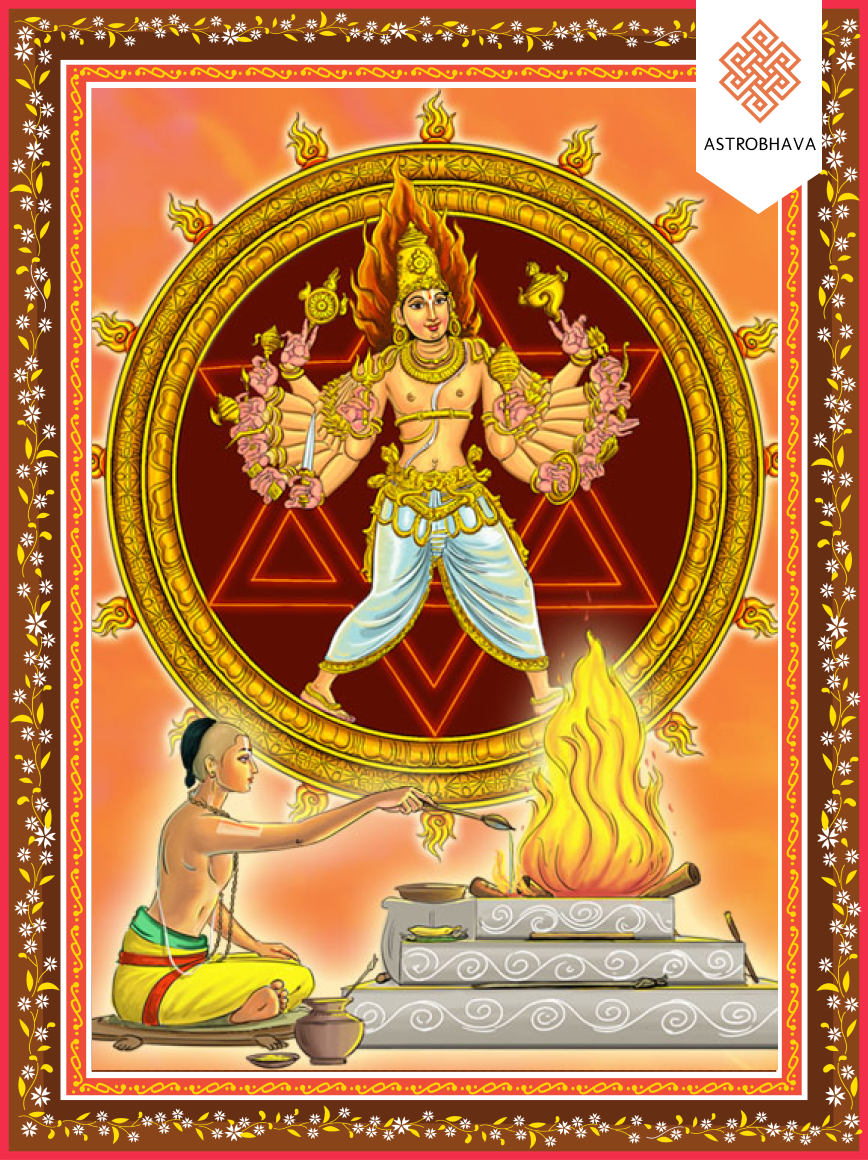
Vāsudeva is the designation under which the Bhāgavata and Pāñcarātra traditions contemplate Kṛṣṇa as the indwelling Self who abides in every being. The name is formed from vāsu, “that which dwells,” and deva, “the luminous one,” so that the twelve-syllable formula addresses not a remote celestial figure but the consciousness seated in the heart. Iconographically he appears four-armed, bearing conch, discus, mace and lotus, yet the mantra itself never catalogues these emblems; it simply names him. In the four-vyūha doctrine Vāsudeva stands as the primal emanation from whom Saṃkarṣaṇa, Pradyumna and Aniruddha unfold. Among Śrīvaiṣṇava and Gauḍīya lineages the Dwadashakshara is therefore treated as the mūla-mantra of intimate recognition, distinct from both the eight-syllable address to Nārāyaṇa and the six-syllable formulas of other forms. Its twelve akṣaras are counted without addition or omission, oṃ itself forming the first.
The River Naming of Vāsudeva
The tenth skandha of the Bhāgavata Purāṇa narrates the night on which the infant received the name that the mantra later crystallises. Vasudeva carried the newborn across the Yamunā while the waters parted and Śeṣa arched his hoods overhead. At Nanda’s threshold the child was laid beside Yaśodā and the exchange with her daughter was completed, yet the patronymic Vāsudeva clung to him as more than lineage. Years later, when Akrūra ferried the same youth back across that river toward Mathurā, he beheld the dual form of the Puruṣa and addressed him openly as Vāsudeva, the one who dwells within. The Viṣṇu Purāṇa glosses the name as the inner controller present in all bodies. In the Nārāyaṇīya portion of the Mahābhārata, Bhīṣma likewise instructs Yudhiṣṭhira that worship directed to Vāsudeva is worship of the single reality that is both transcendent and immanent. The twelve-syllable mantra gathers these moments of recognition into a single verbal form; it does not petition for intervention but restates the scriptural act of naming.
The mantra, in six scripts
The seed mantra, and the form most devotees chant daily. No initiation is required — it is open to anyone, including a parent chanting for a child.
DevanagariSanskrit & Hindiॐ नमो भगवते वासुदेवाय
Tamilௐ நமோ பகவதே வாஸுதேவாய
Teluguఓం నమో భగవతే వాసుదేవాయ
Kannadaಓಂ ನಮೋ ಭಗವತೇ ವಾಸುದೇವಾಯ
Malayalamഓം നമോ ഭഗവതേ വാസുദേവായ
EnglishRoman transliterationoṃ namo bhagavate vāsudevāya
“Salutation to the Blessed Lord Vāsudeva.”
ॐ
oṃ — the primal syllable
नमो
namo — salutation
भगवते
bhagavate — to the Blessed Lord
वासुदेवाय
vāsudevāya — to Vāsudeva
Aim is the mantra, in a sense. The rest is address and salutation; the seed syllable carries the goddess. Where a practitioner has been given a very short practice, it is often Aim alone.
The syllable people get wrong
In bhagavate the short a of the syllable ga is frequently lengthened by reciters into gā, yielding the distorted bhagāvate. That single alteration shifts the rhythmic balance of the twelve syllables and erases the even cadence preserved in traditional South Indian pāṭhaśālā recitation.
When Dwadashakshara is chanted
Weekday. Thursday
Festival. Janmāṣṭamī, when the birth of Vāsudeva is marked by night-long remembrance of the twelve-syllable name in Vaiṣṇava temples and households.
Questions
Dwadasha denotes twelve and akṣara denotes syllable. When the phrase oṃ namo bhagavate vāsudevāya is segmented according to Sanskrit prosody it yields exactly twelve units, oṃ counting as one. The numerical designation distinguishes it from the aṣṭākṣara addressed to Nārāyaṇa and from other counted formulas in the Pāñcarātra lists. Medieval paddhatis therefore catalogue it under the heading dvādaśākṣara-mantra of Vāsudeva alone.
Pāñcarātra theology presents Vāsudeva as the pristine, undivided source. From him emerges Saṃkarṣaṇa, who carries the power of dissolution; from Saṃkarṣaṇa arises Pradyumna, linked with creation; from Pradyumna comes Aniruddha, associated with preservation. The twelve-syllable mantra therefore addresses the deity at the point before differentiation, which is why commentators treat it as ontologically prior to mantras of the subsequent vyūhas.
The Gopāla-tāpanī and Kali-santaraṇa Upaniṣads speak of twelve-syllable formulas centred on Kṛṣṇa-Vāsudeva, though manuscript traditions vary in the precise sequence of epithets. The Bhāgavata Purāṇa, read by many as an expansive commentary on those Upaniṣads, repeatedly places the vocative Vāsudeva at moments of pure recognition rather than petition. Later compilations such as the Hari-bhakti-vilāsa collate these strands to affirm the mantra’s standing within the broader Vedāntic corpus.
Not sure a mantra is enough?
Have your chart read before you decide
Chanting is yours to do, and free. But which deity your situation calls for — and whether a mantra alone is the right response — depends on your chart. Sometimes it is; sometimes it is not.
Brahmashree Shivaaya
Guru, Head of Astrological & Spiritual Solutions
Over 30 years in the Guru–Sishya Parampara, from the age of five
He reads every chart himself — 60 minutes, one to one, never delegated
Charts are read only between sunrise and sunset, following tradition
Chanting is yours to do. Some things are performed for you.
Where a matter carries real weight — an examination that decides a course, a performance, a child whose studies have stalled — devotees sponsor the homa alongside their own practice. Performed individually at our Yagna Ashram in your name and gotra, on a muhurta calculated from your chart, and telecast live so you can watch it done for you.