Mantra · Sunday. For authority, the father and standing.
Surya — the Sun
ॐ सूर्याय नमः
In Devanagari, Tamil, Telugu, Kannada, Malayalam and English — with the meaning of every word, and the one syllable most people pronounce wrongly.
Who Surya — the Sun is
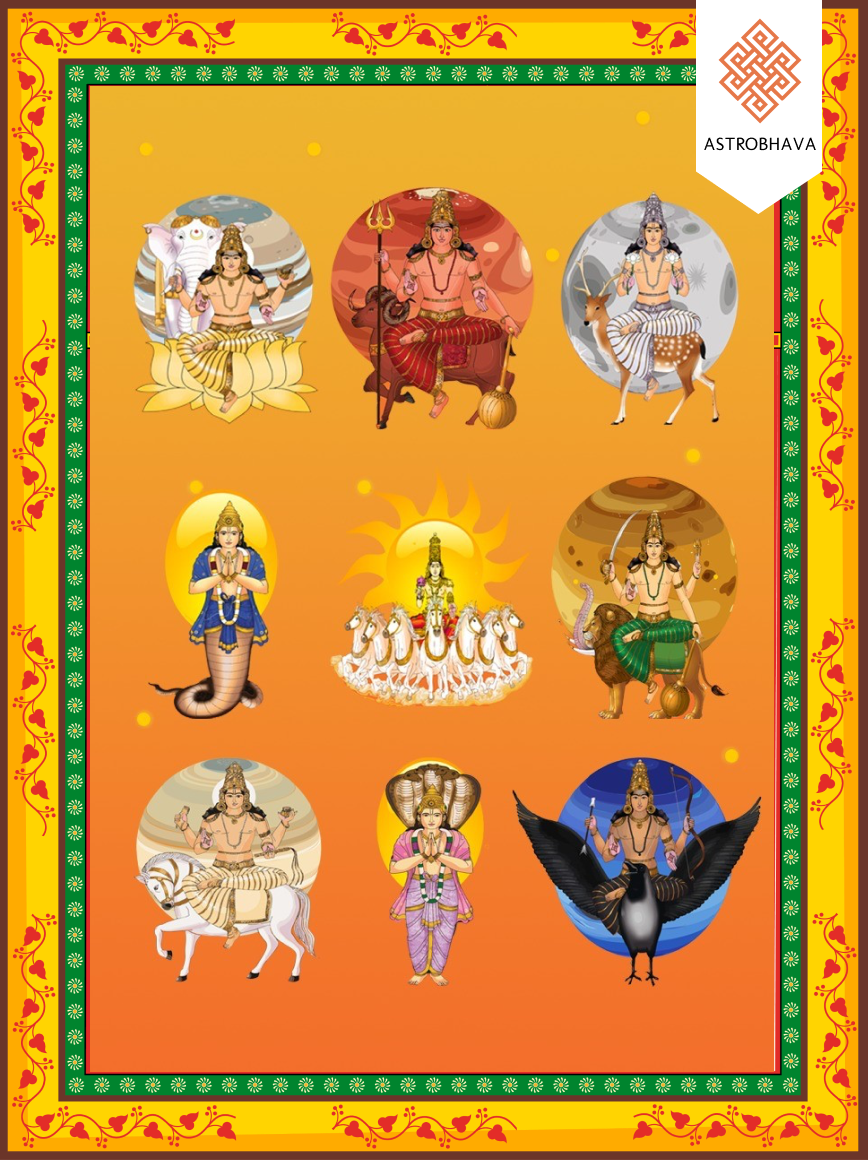
Surya is the solar deity visible each day, praised in the Rigveda as the eye of the gods and the measurer of the sky who drives a chariot drawn by seven horses. Puranic genealogy names him son of the sage Kashyapa and Aditi, and therefore chief among the Adityas. He is father of Manu, of Yama, of the Ashvins, and, through Kunti’s invocation, of Karna. Classical iconography shows him standing on a lotus or within his chariot, wearing the distinctive northern boots, both hands holding lotuses, sometimes attended by the dawn goddesses or by his charioteer Aruna. The Saura streams of worship once maintained independent temples and priestly lineages devoted solely to him, treating the disk of the sun as the clearest accessible form of the divine. In Smarta and broader practice he remains the deity of Sunday and of the authoritative light that orders the day.
Agastya’s Hymn on the Field
In the Yuddha Kanda of the Ramayana, on the eve of the decisive combat with Ravana, the sage Agastya approaches Rama upon the battlefield and imparts the Aditya Hridaya, a concentrated hymn to Surya. The text presents the sun as the dwelling of all the gods, the vital energy of the three worlds, and the power that drives away both outer night and inner confusion. Agastya names Surya through a long chain of epithets—Aditya, Savitr, Khaga, Pushan, Bhaskara—and instructs that the hymn be held in mind with steadiness. The epic states that after Rama receives the teaching the clarity required for the struggle that follows becomes present. Commentarial tradition reads the episode as the moment when the solar deity enters the Vaishnava narrative as the visible source of a warrior’s collected strength. The same hymn later circulates independently in Saura and Smarta recitation, detached from the battle context yet still carrying the memory of that field before Lanka. The passage remains the principal Ramayana locus for Surya’s martial and illuminative character.
The mantra, in six scripts
The seed mantra, and the form most devotees chant daily. No initiation is required — it is open to anyone, including a parent chanting for a child.
DevanagariSanskrit & Hindiॐ सूर्याय नमः
Tamilௐ ஸூர்யாய நமஃ
Teluguఓం సూర్యాయ నమః
Kannadaಓಂ ಸೂರ್ಯಾಯ ನಮಃ
Malayalamഓം സൂര്യായ നമഃ
EnglishRoman transliterationoṃ sūryāya namaḥ
“Salutation to Surya.”
ॐ
oṃ — the sacred syllable
सूर्याय
sūryāya — to Surya
नमः
namaḥ — salutation
Aim is the mantra, in a sense. The rest is address and salutation; the seed syllable carries the goddess. Where a practitioner has been given a very short practice, it is often Aim alone.
The syllable people get wrong
The long ū of sū in sūryāya is the point of failure. Many speakers shorten it to a mid u, yielding “suryaya” rather than the required sū-ryā-ya. The vowel must remain full and round before the rya conjunct closes; any clipping collapses the opening syllable of the name itself.
When Surya — the Sun is chanted
Festival. Ratha Saptami
Questions
In Vedic and early Puranic listing Surya stands among the Adityas, the offspring of Aditi. Some passages treat him as the foremost or the most visible of that group; others use Aditya itself as his primary name. The relationship is one of inclusion within a class of solar and sovereign deities rather than simple identity with every Aditya.
The Rigveda and later iconographic texts describe the chariot as drawn by seven horses, commonly understood as the seven days of the week or the seven metres of Vedic verse. The single wheel of the chariot is another constant feature, marking the cyclic yet unified path of the sun across the sky.
The booted feet are a fixed element of Surya’s north-Indian and pan-Indian iconography, distinguishing him from most other deities who are shown barefoot. Scholars link the detail to early contacts with Iranian solar imagery, yet within Hindu tradition the boots simply form part of the recognised body of the sun god.
Not sure a mantra is enough?
Have your chart read before you decide
Chanting is yours to do, and free. But which deity your situation calls for — and whether a mantra alone is the right response — depends on your chart. Sometimes it is; sometimes it is not.
Brahmashree Shivaaya
Guru, Head of Astrological & Spiritual Solutions
Over 30 years in the Guru–Sishya Parampara, from the age of five
He reads every chart himself — 60 minutes, one to one, never delegated
Charts are read only between sunrise and sunset, following tradition
Chanting is yours to do. Some things are performed for you.
Where a matter carries real weight — an examination that decides a course, a performance, a child whose studies have stalled — devotees sponsor the homa alongside their own practice. Performed individually at our Yagna Ashram in your name and gotra, on a muhurta calculated from your chart, and telecast live so you can watch it done for you.