Mantra · Monday. For the mind, the mother and steadiness.
Chandra — the Moon
ॐ चन्द्राय नमः
In Devanagari, Tamil, Telugu, Kannada, Malayalam and English — with the meaning of every word, and the one syllable most people pronounce wrongly.
Who Chandra — the Moon is
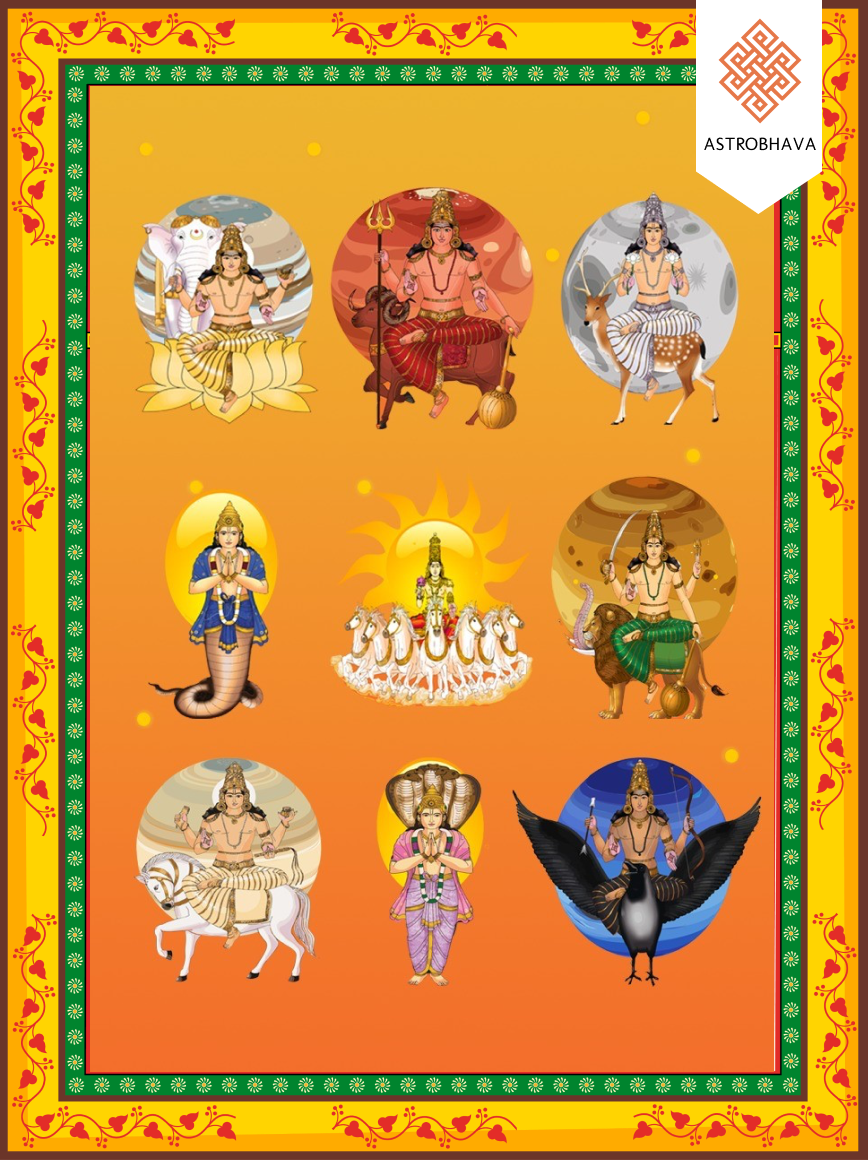
Chandra is the lunar deity, known in the Vedic hymns also as Soma, who governs the night sky and the visible rhythm of waxing and waning. The Rigveda praises him both as the purified plant of the sacrifice and as the moon who moves among the nakshatras. Puranic accounts make him the son of the sage Atri and Anasuya, while another strand describes him rising from the ocean of milk at the time of its churning. He is consort to the twenty-seven daughters of Daksha who become the lunar mansions, and through Tara he is father of Budha. Images show him pale, two-armed, holding a club and a lotus, standing upon a chariot drawn by ten white horses or by an antelope. In the weekly cycle he is the deity of Monday; in the subtle body of yogic and Ayurvedic description he is the cool, preserving principle set opposite the heat of Surya.
The Curse of Daksha
The Matsya Purana and the Vishnu Purana recount that Chandra married the twenty-seven daughters of Daksha Prajapati, each of whom is identified with one of the nakshatras. Although he had accepted them all with equal vow, he showed open preference for Rohini alone. The remaining sisters carried their grievance to their father. Daksha warned Chandra more than once; when the partiality continued he laid a curse that the moon should waste away to nothing. As the light of Chandra diminished and the herbs and tides that depend upon him began to fail, the gods sought a mitigation. The curse was altered so that the wasting would not be final: one half of each month the moon would wane, the other half it would wax again. The story supplies the mythic account of the lunar phases and fixes Chandra as a deity whose radiance is inherently periodic rather than constant. Later medical and yogic texts draw on the same cycle when they speak of the movement of cooling nectar and the alternating dominance of lunar and solar currents within the body.
The mantra, in six scripts
The seed mantra, and the form most devotees chant daily. No initiation is required — it is open to anyone, including a parent chanting for a child.
DevanagariSanskrit & Hindiॐ चन्द्राय नमः
Tamilௐ சந்த்ராய நமஃ
Teluguఓం చన్ద్రాయ నమః
Kannadaಓಂ ಚನ್ದ್ರಾಯ ನಮಃ
Malayalamഓം ചന്ദ്രായ നമഃ
EnglishRoman transliterationoṃ candrāya namaḥ
“Salutation to Chandra.”
ॐ
oṃ — the sacred syllable
चन्द्राय
candrāya — to Chandra
नमः
namaḥ — salutation
Aim is the mantra, in a sense. The rest is address and salutation; the seed syllable carries the goddess. Where a practitioner has been given a very short practice, it is often Aim alone.
The syllable people get wrong
The conjunct ndr inside candrāya is the habitual snare. Speakers insert a light vowel between n and d, producing “can-dra” with an extra beat, or they flatten the whole cluster into a soft “andra.” The nasal must close directly into the voiced dental without pause, keeping the name to its proper three syllables.
When Chandra — the Moon is chanted
Festival. Sharad Purnima
Questions
In the Rigveda the name Soma refers both to the purified sacrificial plant and to the moon. The two are linked by the shared qualities of cooling light, rhythmic increase, and the bestowal of delight. Later tradition largely reserves Soma for the ritual substance and Chandra for the planetary deity, yet the older identity remains audible in many hymns.
Puranic narrative makes the nakshatras the daughters of Daksha and the wives of Chandra. Each lunar mansion is therefore both a star-group and a consort. The moon’s nightly movement through them is read as the husband visiting each wife in turn, with the lingering at Rohini explained by the story of Daksha’s curse.
One strand of Purana lists Chandra among the treasures that rise from the milky ocean when it is churned by gods and asuras. Another strand names him the mind-born or ordinary son of Atri and Anasuya. Tradition holds both accounts without forcing them into a single timeline; each emphasises a different aspect—one of emergence and radiance, the other of sage-lineage and lunar coolness.
Not sure a mantra is enough?
Have your chart read before you decide
Chanting is yours to do, and free. But which deity your situation calls for — and whether a mantra alone is the right response — depends on your chart. Sometimes it is; sometimes it is not.
Brahmashree Shivaaya
Guru, Head of Astrological & Spiritual Solutions
Over 30 years in the Guru–Sishya Parampara, from the age of five
He reads every chart himself — 60 minutes, one to one, never delegated
Charts are read only between sunrise and sunset, following tradition
Chanting is yours to do. Some things are performed for you.
Where a matter carries real weight — an examination that decides a course, a performance, a child whose studies have stalled — devotees sponsor the homa alongside their own practice. Performed individually at our Yagna Ashram in your name and gotra, on a muhurta calculated from your chart, and telecast live so you can watch it done for you.