Mantra · Friday. For marriage, comfort and the arts.
Shukra — Venus
ॐ द्रां द्रीं द्रौं सः शुक्राय नमः
In Devanagari, Tamil, Telugu, Kannada, Malayalam and English — with the meaning of every word, and the one syllable most people pronounce wrongly.
Who Shukra — Venus is
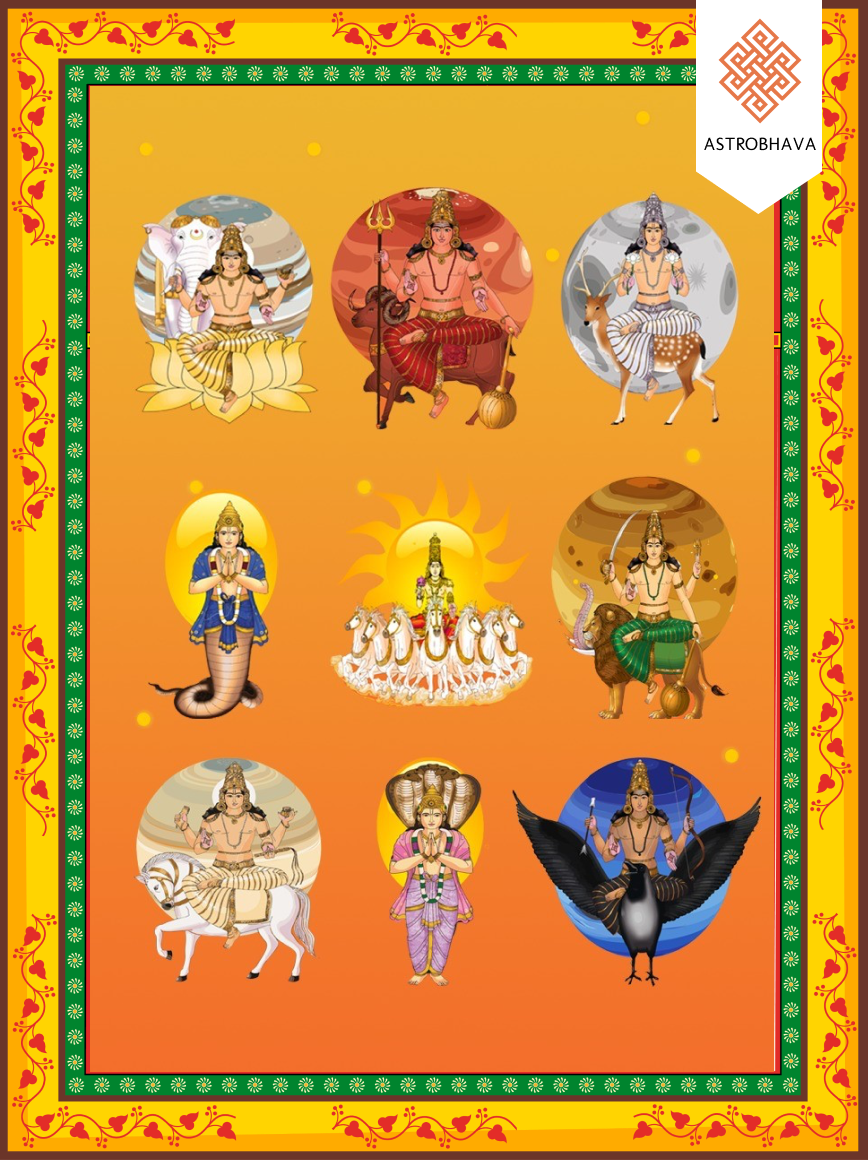
Shukra, also called Shukracharya, is the planetary deity of Venus and the appointed preceptor of the asuras in Puranic cosmology. Son of the sage Bhrigu and Khyati, he alone among the nine grahas is said to hold the mṛtasañjīvanī lore that restores the fallen to life. Jyotiṣa assigns him Friday, the southeast quarter, and the significations of refinement, vehicles, poetry, and the marriage bond. Iconographic texts describe a fair, luminous body, white garments, and a horse as mount. His standing as guru to the daityas, rather than to the devas, sets him apart from Brihaspati and marks him as the necessary counterweight within the cosmic order of counsel and desire.
Kacha and the Sanjivani
The Matsya Purāṇa and the Ādi Parvan of the Mahābhārata recount how Shukra obtained from Śiva the secret of mṛtasañjīvanī after prolonged austerity. In the wars that followed, every asura slain by the gods rose again under Shukra’s hand, while the devas had no such remedy. The gods therefore sent Kacha, son of Brihaspati, to serve Shukra as a disciple and learn the formula. The asuras murdered Kacha again and again; each time Shukra, moved by the tears of his daughter Devayānī, restored the youth. At last they reduced Kacha to ash, mixed the ash into wine, and offered the wine to their own preceptor. When Devayānī once more begged for Kacha’s life, Shukra discovered the disciple inside his body. He taught Kacha the mantra so that the youth, once revived and emerged, could restore his teacher in turn. Kacha then refused Devayānī’s hand and carried the knowledge back to the gods. The episode fixes Shukra as the sole planetary lord who commands the boundary between death and return.
The mantra, in six scripts
The seed mantra, and the form most devotees chant daily. No initiation is required — it is open to anyone, including a parent chanting for a child.
“Salutation to Shukra, joined with the seed-syllables drāṃ, drīṃ, drauṃ and saḥ.”
ॐ
oṃ — the sacred syllable
द्रां
drāṃ — seed-syllable drāṃ
द्रीं
drīṃ — seed-syllable drīṃ
द्रौं
drauṃ — seed-syllable drauṃ
सः
saḥ — seed-syllable saḥ
शुक्राय
śukrāya — to Shukra
नमः
namaḥ — salutation
Aim is the mantra, in a sense. The rest is address and salutation; the seed syllable carries the goddess. Where a practitioner has been given a very short practice, it is often Aim alone.
The syllable people get wrong
In śukrāya the opening syllable śu carries a short u that speakers almost always lengthen into the prolonged English ‘oo’ of ‘shoe’, producing ‘shoo-krāya’. The u must remain brief and closed, occupying only a single light beat before the conjunct kra begins.
When Shukra — Venus is chanted
Festival. Shukravāra Vrata observed on Fridays
Questions
Puranic tradition places Shukra as the son of Bhrigu who chose, or was appointed to, the side of the daityas. His possession of mṛtasañjīvanī gave the asuras a decisive advantage in battle, and that allegiance became permanent. Brihaspati remains preceptor of the devas; the two gurus therefore stand as balanced opposites in the cosmology of counsel.
Devayānī is Shukra’s daughter. In the Kacha episode she repeatedly intercedes for the disciple’s life, and her grief forces Shukra to reveal and transmit the life-restoring mantra. Later cycles link her marriage to Yayāti, but her earliest and most distinctive role is as the emotional pivot through which the Sanjivani knowledge leaves the asura camp.
The Bṛhat Parāśara Horā Śāstra and related works treat Shukra as the significator of pleasure, artistic skill, conveyances, and the spouse. His temperament is described as gentle yet firm in counsel, and his placement is read for the capacity to refine and to bind rather than for austerity or sudden rupture.
Not sure a mantra is enough?
Have your chart read before you decide
Chanting is yours to do, and free. But which deity your situation calls for — and whether a mantra alone is the right response — depends on your chart. Sometimes it is; sometimes it is not.
Brahmashree Shivaaya
Guru, Head of Astrological & Spiritual Solutions
Over 30 years in the Guru–Sishya Parampara, from the age of five
He reads every chart himself — 60 minutes, one to one, never delegated
Charts are read only between sunrise and sunset, following tradition
Chanting is yours to do. Some things are performed for you.
Where a matter carries real weight — an examination that decides a course, a performance, a child whose studies have stalled — devotees sponsor the homa alongside their own practice. Performed individually at our Yagna Ashram in your name and gotra, on a muhurta calculated from your chart, and telecast live so you can watch it done for you.