In Devanagari, Tamil, Telugu, Kannada, Malayalam and English — with the meaning of every word, and the one syllable most people pronounce wrongly.
Who Shiva Tandava Stotram is
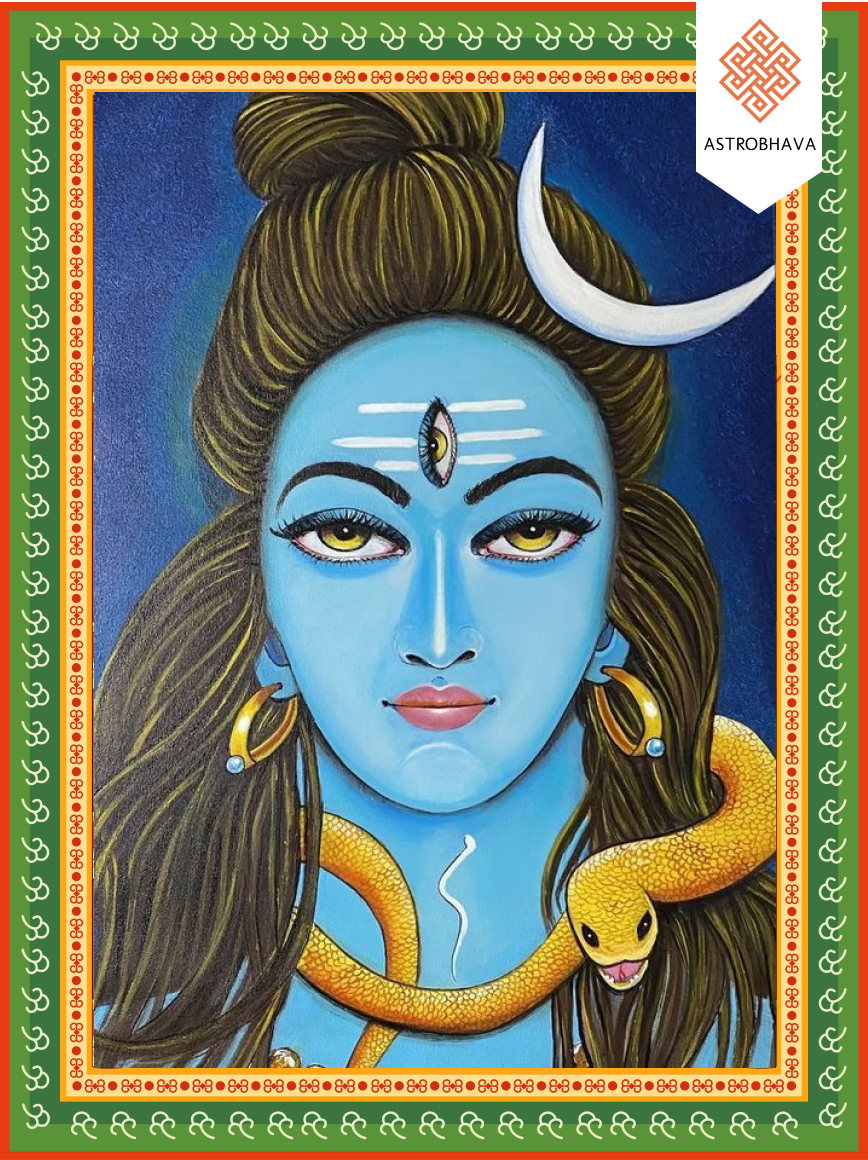
The Shiva Tandava Stotram praises the god exclusively in the midst of his fierce tandava, the cosmic dance that shakes the worlds. Composed in the voice of Ravana, the hymn never softens into the quiet yogin or the householding husband; every verse piles on the imagery of matted locks whipping through space, the Ganga tumbling from them, serpents coiled as garlands, and the drum rattling damat-damat. The deity addressed is therefore the dancer whose stamping foot both creates and dissolves, whose laughter is the roll of thunder, whose ornaments are living cobras. No other form—neither the lingam’s stillness nor the bilva’s cool leaf—enters the poem; the stotra remains locked inside the whirlwind of that single, world-shaking performance.
Ravana Beneath Kailasa
The Uttara Kanda of the Ramayana and later Shaiva retellings describe how Ravana, proud of the strength that had conquered the three worlds, came to Mount Kailasa and attempted to uproot it so that he might carry Shiva’s abode to Lanka. As he heaved, the mountain trembled and Parvati was alarmed. Shiva, seated in meditation, simply pressed the mountain down with the great toe of his right foot, pinning Ravana beneath the rock for a thousand years. In that crushed darkness the ten-headed king fashioned the Shiva Tandava Stotram, weaving the sights he remembered of the god’s dance into cascading alliteration. When the hymn was complete, Shiva released him and granted the boon of the invincible sword Chandrahasa. The stotra therefore originates not from a court poet or a rishi but from the agony and awe of the demon-king who had felt the weight of the dancer’s single toe.
The mantra, in six scripts
The seed mantra, and the form most devotees chant daily. No initiation is required — it is open to anyone, including a parent chanting for a child.
“May Shiva, who performed the fierce tandava on the ground purified by the stream flowing from the forest of his matted hair, a lofty garland of serpents hanging at his neck, the damaru rolling ḍamaḍ-ḍamaḍ-ḍamaḍ-ḍam, bestow auspiciousness upon us.”
जटाटवी
jaṭāṭavī — forest of matted locks
गलत्
galat — flowing down
जल
jala — water
प्रवाह
pravāha — stream
पावित
pāvita — purified
स्थले
sthale — on the ground
गले
gale — on the neck
अवलम्ब्य
avalambya — having hung
लम्बितां
lambitāṃ — dangling
भुजङ्ग
bhujaṅga — serpent
तुङ्ग
tuṅga — lofty
मालिकाम्
mālikām — garland
डमड्डमड्डमड्डमन्
ḍamaḍḍamaḍḍamaḍḍaman — ḍamaḍ-ḍamaḍ-ḍamaḍ-ḍam
निनादवत्
ninādavat — with the sound
डमरु
ḍamaru — damaru drum
अयं
ayaṃ — he
चकार
cakāra — performed
चण्ड
caṇḍa — fierce
ताण्डवं
tāṇḍavaṃ — tandava dance
तनोतु
tanotu — may he extend
नः
naḥ — to us
शिवः
śivaḥ — Shiva
शिवम्
śivam — auspiciousness
Aim is the mantra, in a sense. The rest is address and salutation; the seed syllable carries the goddess. Where a practitioner has been given a very short practice, it is often Aim alone.
The syllable people get wrong
The drum-word ḍamaḍḍama contains the retroflex ḍ repeated with a doubled ḍḍ; speakers often soften both to dental d or collapse the cluster into a single “dam-a-dam,” erasing the hammer-stroke force that the verse deliberately mimics.
When Shiva Tandava Stotram is chanted
Weekday. Monday
Festival. Maha Shivaratri night recitation
Questions
Because the narrative frame requires a witness who has both seen the tandava and felt its crushing power; Ravana’s thousand-year imprisonment under Kailasa supplies the only vantage from which the cascading consonants of the hymn could be forged, turning demonic pride into metrical awe.
The repeated ḍamaḍḍama is not ornament; it is the sonic body of the damaru that beats time for the tandava itself. Later verses continue the same percussive density, so that the entire stotra functions as an extended drum-roll accompanying the dance it describes.
No. Even the closing benediction remains inside the tandava: the same Shiva who stamped out the fierce dance is asked to extend śivam, auspiciousness, without any shift to didactic or domestic imagery.
Not sure a mantra is enough?
Have your chart read before you decide
Chanting is yours to do, and free. But which deity your situation calls for — and whether a mantra alone is the right response — depends on your chart. Sometimes it is; sometimes it is not.
Brahmashree Shivaaya
Guru, Head of Astrological & Spiritual Solutions
Over 30 years in the Guru–Sishya Parampara, from the age of five
He reads every chart himself — 60 minutes, one to one, never delegated
Charts are read only between sunrise and sunset, following tradition
Chanting is yours to do. Some things are performed for you.
Where a matter carries real weight — an examination that decides a course, a performance, a child whose studies have stalled — devotees sponsor the homa alongside their own practice. Performed individually at our Yagna Ashram in your name and gotra, on a muhurta calculated from your chart, and telecast live so you can watch it done for you.