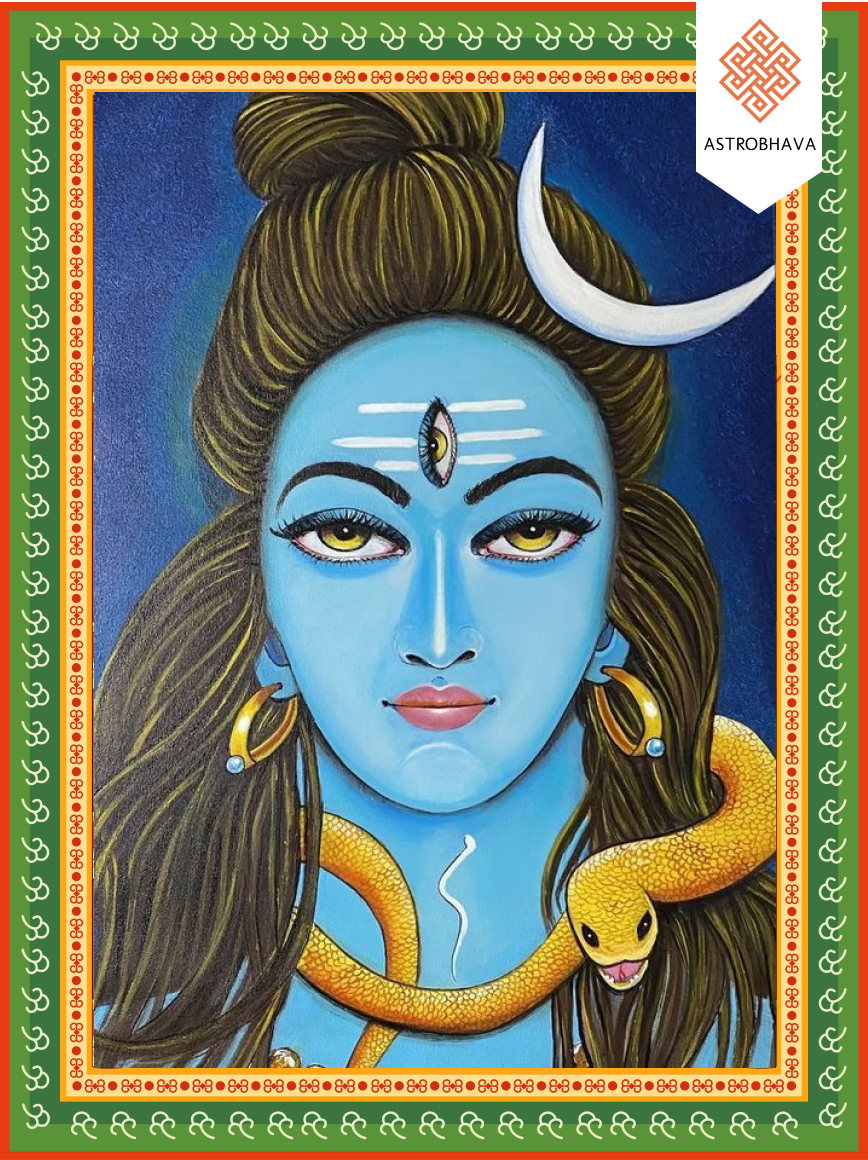
Panchakshari — Om Namah Shivaya, as worshipped at our temple
Mantra · The five syllables. The central Shaiva mantra.
Panchakshari — Om Namah Shivaya
ॐ नमः शिवाय
In Devanagari, Tamil, Telugu, Kannada, Malayalam and English — with the meaning of every word, and the one syllable most people pronounce wrongly.
Who Panchakshari — Om Namah Shivaya is
The Panchakshari is the five-syllabled formula Om Namah Shivaya that stands at the centre of Shaiva liturgy and contemplative practice. It is addressed to Shiva as the auspicious one whose very name constitutes the mantra. Classical Shaiva scriptures treat the five syllables as corresponding to the five faces of Sadashiva, the five elements, and the five acts of creation, preservation, concealment, revelation, and reabsorption. The formula appears already in the Yajurveda’s Rudradhyaya in the slightly longer form Namah Shivaya, the initial Om being understood as the eternal sound that precedes all utterance. In the Tamil Shaiva tradition the same five syllables are called the “holy pentad” and are woven through the Tevaram hymns of the Nayanmars. Unlike longer stotras that recount myths, the Panchakshari is regarded as Shiva’s own self-revelation compressed into sound, requiring no narrative frame beyond the recognition of the deity who is both the speaker and the spoken.
Five Syllables from the Vedic Core
The Krishna Yajurveda’s Taittiriya Samhita contains the Rudra-prashna in which the phrase Namah Shivaya appears among the many salutations offered to Rudra. Shaiva exegetes of the early medieval period, notably in the Shiva Rahasya and the unpublished paddhatis of the Shaiva Siddhanta schools, isolated these five syllables as the essential name. A well-known frame story in the Shiva Purana recounts that the boy Markandeya, clasped by the noose of death, uttered the five syllables; Yama’s rope fell away and Shiva himself manifested as Kalasamhara. The same Purana elsewhere states that the syllables were taught by Shiva to Parvati on Mount Kailasa as the most direct means of recognising his presence within every sound. Tamil hagiography adds that the saint Jnana-sambandar, as a child, received the Panchakshari from Shiva and Uma in the form of divine milk, after which the five syllables became the ground of all his hymns. These accounts locate the mantra’s authority both in Vedic revelation and in personal encounter with the deity who is named.
The mantra, in six scripts
The seed mantra, and the form most devotees chant daily. No initiation is required — it is open to anyone, including a parent chanting for a child.
DevanagariSanskrit & Hindiॐ नमः शिवाय
Tamilௐ நமஃ ஶிவாய
Teluguఓం నమః శివాయ
Kannadaಓಂ ನಮಃ ಶಿವಾಯ
Malayalamഓം നമഃ ശിവായ
EnglishRoman transliterationoṃ namaḥ śivāya
“Om, salutation to Shiva.”
ॐ
oṃ — the primordial sound
नमः
namaḥ — salutation
शिवाय
śivāya — to Shiva
Aim is the mantra, in a sense. The rest is address and salutation; the seed syllable carries the goddess. Where a practitioner has been given a very short practice, it is often Aim alone.
The syllable people get wrong
The syllable śi in śivāya is often pronounced as a plain dental “si” or an English “shi,” yet the correct palatal ś requires the blade of the tongue to approach the hard palate, producing a softer fricative than the retroflex ṣ of Viṣṇu; failure to raise the tongue flattens the name into a common noun rather than the proper sonic seal of the deity.
When Panchakshari — Om Namah Shivaya is chanted
Weekday. Monday
Festival. Maha Shivaratri, when the Panchakshari is recited throughout the night vigil
Questions
In strict counting the five syllables are na-maḥ-śi-vā-ya; Om is regarded as the eternal prefix that stands outside the pentad yet is inseparable from its utterance in Shaiva practice.
Shaiva Agamas equate na with Ishana, ma with Tatpurusha, śi with Aghora, vā with Vamadeva, and ya with Sadyojata, mapping the mantra onto the fivefold face of Sadashiva.
The Rudradhyaya itself presents Namah Shivaya without the initial Om; the fuller six-syllabled version with Om belongs to the later tantric and puranic streams of Shaivism.
Not sure a mantra is enough?
Have your chart read before you decide
Chanting is yours to do, and free. But which deity your situation calls for — and whether a mantra alone is the right response — depends on your chart. Sometimes it is; sometimes it is not.
Brahmashree Shivaaya
Guru, Head of Astrological & Spiritual Solutions
Over 30 years in the Guru–Sishya Parampara, from the age of five
He reads every chart himself — 60 minutes, one to one, never delegated
Charts are read only between sunrise and sunset, following tradition
Chanting is yours to do. Some things are performed for you.
Where a matter carries real weight — an examination that decides a course, a performance, a child whose studies have stalled — devotees sponsor the homa alongside their own practice. Performed individually at our Yagna Ashram in your name and gotra, on a muhurta calculated from your chart, and telecast live so you can watch it done for you.