Homas are being performed LIVE at our Yagna Ashram — watch today's ceremonies
HomeHomaProtection & Negative Energy › Panchamukha Hanuman Homa
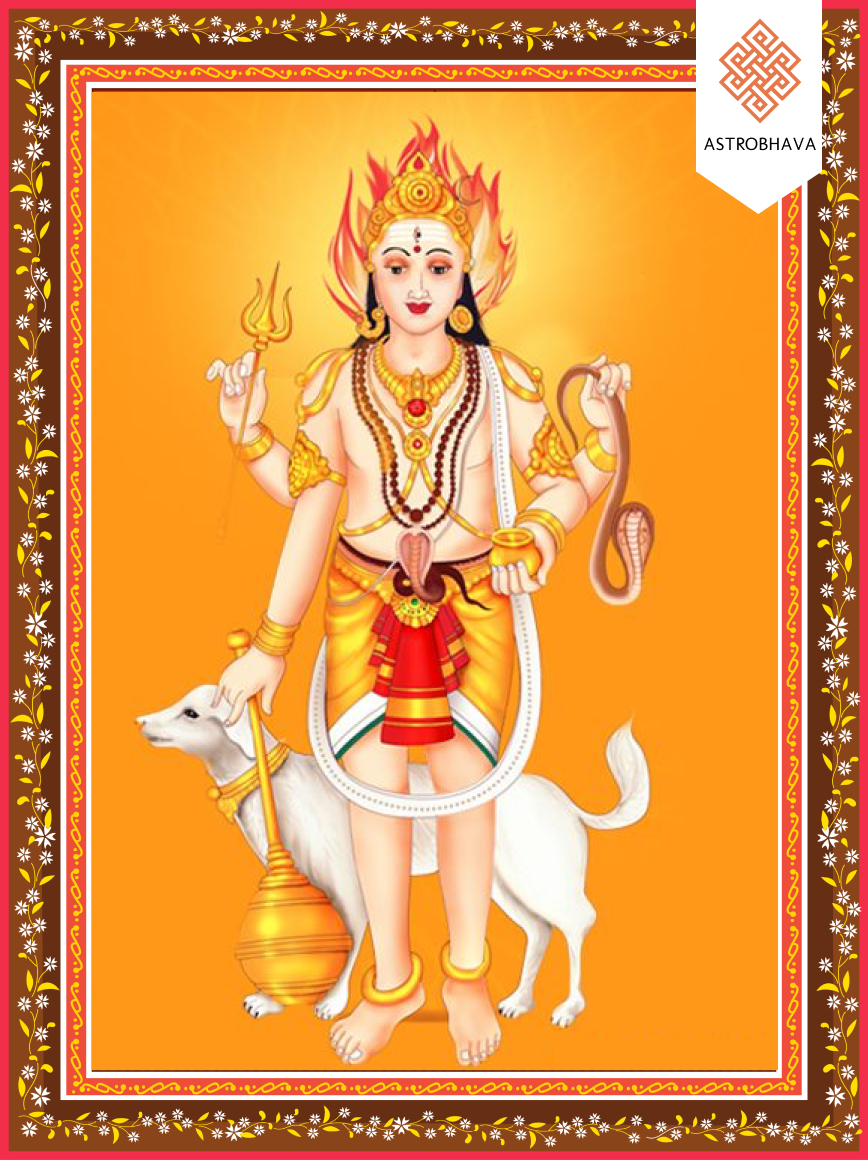
Telecast Live Panchamukha Hanuman, the deity invoked in the Panchamukha Hanuman Homa at AstroBhava
Protection & Negative Energy · maha Homa · Live from our Yagna Ashram

Panchamukha Hanuman Homa

Also spelled Panchamukha Hanuman Homam

पञ्चमुख हनुमान होम

Five faces turned to five directions, one fire between them — the guard Hanuman keeps around a home when unseen harm draws near.

  • Performed for you alone — never a group ceremony
  • Muhurta fixed from your own birth chart, confirmed within 24–48 working hours
  • Free energised yantra, sealed in a silver amulet, shipped worldwide at no charge
The Ritual and Its Weight

The Panchamukha Hanuman Homa is a fire rite offered to Hanuman in his five-faced form — Hanuman facing east, Narasimha facing south, Garuda facing west, Varaha facing north, and Hayagriva looking upward. Tradition says he took this form to extinguish five lamps burning in five directions at once, and so ended the sorcery of Ahiravana who had carried Rama and Lakshmana to the netherworld. That story is the heart of the rite. Where harm can come from any side, the protector must be able to look every way at the same moment.

This is why the Panchamukha Hanuman homam is turned to when a household feels watched, drained or interfered with — the shadow of an evil eye, whispered ill-will, ritual harm worked at a distance, disturbed sleep, or a run of obstruction no one can name. The Maha form of this homa is a long, dense sitting: the five faces are invoked one by one, each with its own offerings, and the fire is fed until the whole circle of directions has been addressed. Nothing is asked of you but your sankalpa and your name, gotra and birth star.

ॐ श्रीरामदूताय हनुमन्ताय पञ्चवक्त्राय महाबलाय आञ्जनेयाय नमो नमः Salutations again and again to Anjani's son, the messenger of Rama, the five-faced one of vast strength.

Why Devotees Book This

The tradition prescribes this rite for households and individuals seeking cover from unseen harm. What follows is what the shastra assigns to the fire, offered in your name.

A shield in all directions

The five faces are invoked toward east, south, west, north and upward, so no quarter is left unattended in the sankalpa.

Against the evil eye

Prescribed traditionally where drishti or ill-will is suspected — after sudden reversals, or when a home feels heavy without cause.

Relief from abhichara

Turned to when black magic or ritual harm worked from a distance is feared, following the Ahiravana episode the rite recalls.

Steadiness of mind

Narasimha and Hayagriva among the five faces are invoked for courage and clarity when fear, dread or restlessness settle in.

Protection for the home

Families book this for a new house, a disturbed dwelling, or children and elders they want kept under Hanuman's watch.

Firmness before opposition

Also sought where enmity, litigation or persistent obstruction shadows work and livelihood.

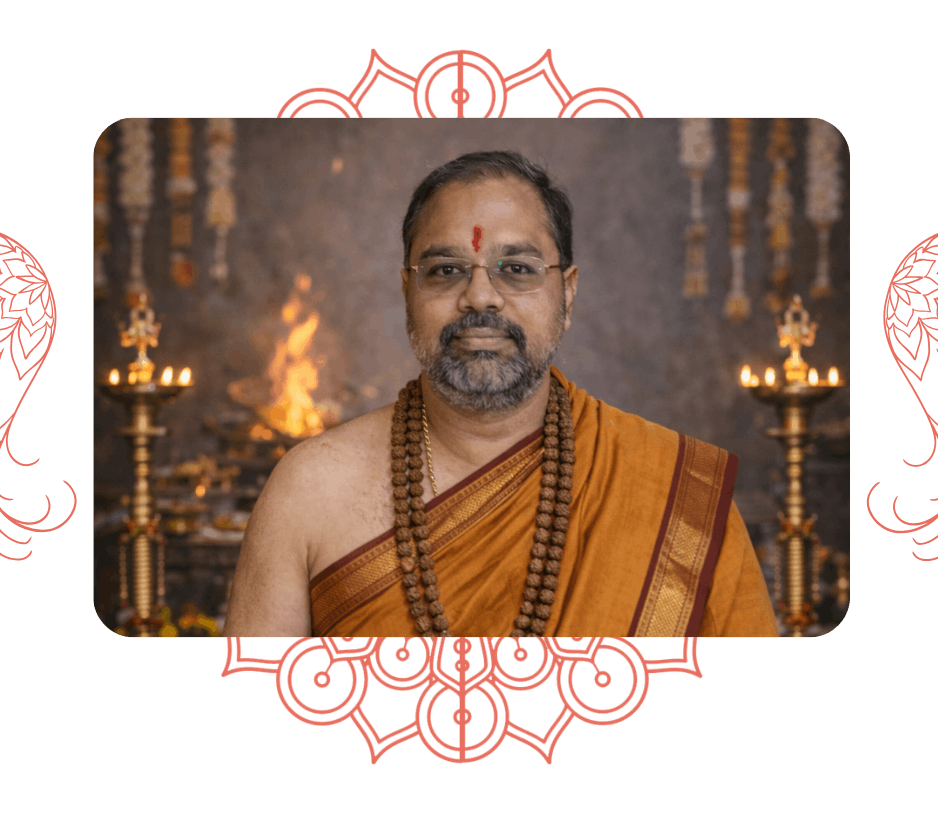
Brahmashree Shivaaya, Guru and Head of Astrological & Spiritual Solutions at AstroBhava
Brahmashree ShivaayaGuru, Head of Astrological & Spiritual Solutions
Who performs your homa

Under the guidance of Brahmashree Shivaaya

Every priest who performs your Panchamukha Hanuman Homa is trained in a traditional Padashala and personally recruited by Brahmashree Shivaaya — Guru and Head of Astrological & Spiritual Solutions at AstroBhava. Your ritual is conducted at our own Yagna Ashram — never a rented venue — with temple rites performed across our seven temples in Tamil Nadu and Kerala.

Meet our priests →
Before you choose

What a Maha Homa is

Not every fire ritual is performed at the same scale. A Maha Homa is our largest form — more priests, a longer fire, and the complete chanting sequence the rite prescribes rather than an abridged one. This is what that means in practice.

Priests5 or 10Chanting in unison, never in rotation
The fire burnsApprox. 2 hoursFrom the sankalpa to the final aarti
ChantedIn fullThe complete sequence the rite calls for, not an excerpt
TelecastEvery minuteNothing is performed off camera

A Maha Homa is performed for one devotee and their named family, the same as any homa we conduct. What the scale changes is the weight of the offering — ten trained voices holding one hymn for two hours is a different undertaking from one voice for an hour, and it is reserved for the intentions that warrant it.

Book your Panchamukha Hanuman Homa

Choose how many priests will chant

Both packages are the same rite. The complete Panchamukha Hanumanm, all thirty-one verses, over approximately two hours, with the same offerings, the same free energised Surya Yantra sealed in its silver amulet, and the same live telecast. What changes is how many trained voices carry the hymn at once.

Your packagePanchamukha Hanuman Maha Homa5 Priests · approx. 2 hours · Free Surya Yantra
₹36,850

All prices are all-inclusive — no shipping charges, no additions at checkout. See everything included →

1

You book — and send birth details at checkout.

2

Within 24–48 working hours — your muhurta is confirmed by email.

3

The day before — your telecast link arrives by email.

4

After the homa — tracking email with your personal time to wear the yantra.

Sacred Timing

Hanuman's days carry this rite best. If your date is fixed by need rather than calendar, our priests will find a suitable muhurat — the fire does not turn anyone away.

Tuesday and Saturday

The two weekdays held sacred to Hanuman. Saturday is especially favoured when Shani's transit is heavy and protection is the intent.

Moola and Swati nakshatra

Nakshatras traditionally associated with Hanuman's strength and with rites of warding. Chitra is also accepted by many lineages.

Hanuman Jayanti

The birth observance — Chaitra Purnima in the north, Margazhi Moola in the Tamil reckoning. The most charged day of the year for this homa.

Krishna Chaturdashi and Amavasya eves

Chosen when the concern is abhichara or psychic disturbance, as these tithis are traditionally used for rites of removal.

Every package, and the 48-day option

What you receive

The sealing of the yantra

When your homa concludes, the yantra that stood in the fire is rolled and locked inside its silver amulet according to Agama vidhi — the practice by which the energies raised in a ritual are held within a consecrated object rather than dispersing. It is why a homa performed at our ashram can still reach a devotee ten thousand miles away: what the fire raised travels to you, sealed.

Personal sankalpa

Your name, gotra & nakshatra — for you and up to five family members.

Live telecast

Watch your own homa in real time from the ashram. Streamed openly on our YouTube channel by default — or request a private, unlisted telecast at checkout.

Free energised Panchamukha Hanuman Yantra, sealed in a silver amulet

Consecrated over three days — Jala (holy-water consecration with mantras), Prana (life force through pranayama & chants) and Jeeva Pratishta (awakened with 108 recitations & offerings) — then present through your homa, receiving the energies raised in the fire. Immediately afterwards it is rolled and sealed inside a silver amulet by Agamic rite, locking those energies within, and shipped to you with your prasadam.

Prasadam, shipped free

Sacred vibhuti, sandalwood powder & kumkum from your fire — delivered to any country.

48-Day Anushthan (optional)

Daily temple worship for 48 days — the 27 Nakshatras + 12 Rashis + 9 Planets — then sealed in a silver amulet of approximately 2–4 inches.

A note on sacred tradition

As per strict Agama vidhi, no videography is permitted inside the temple sanctum — this preserves the pure sacred energies and undisturbed divine focus of the ritual. The main homa is respectfully telecast live from outside the sanctum; the daily rituals of the 48-day Anushthan are performed with full devotion but are not telecast.

Homas are telecast openly on our YouTube channel so that devotees everywhere may witness the rituals — and because we believe you should be able to see our work before you trust us with yours. Your sankalpa names you and your family, so if you would rather your ceremony were not public, choose the private telecast option at checkout and it is streamed as an unlisted link visible only to you.

We state this plainly — transparency about what tradition forbids filming, and about what is public, is part of performing these rituals honestly.

After it arrives

How to wear your energised Panchamukha Hanuman Yantra

The energised yantra is carefully rolled and sealed inside a sacred silver amulet before shipping. Wearing it is itself a small ritual — and even its timing is set for you personally.

01

Your auspicious time to wear it

Our astrologer marks the auspicious date and time to wear the yantra according to your birth details — sent to you in the email carrying your shipment's tracking number.

02

Purify the amulet

Dip the silver amulet in raw milk or Ganga jal for an hour before wearing, then clean with normal water.

03

Face East or North

Perform the wearing process facing east or north for maximum benefit.

04

Offer dheep & dhoop

Show lamp and incense to the amulet before wearing it.

05

Wear it

Around your neck or waist, on a thread or chain.

06

Keep the energy intact

Repeated offering of dheep and dhoop keeps the energisation alive.

07

If you prefer not to wear it

Place the amulet at your puja altar, or keep it in your wallet.

Inside the fire ritual

How your Panchamukha Hanuman Homa is performed

01

Sankalpa

The priest states your name, gotra and nakshatra — and those of up to five family members — with the intention this homa is performed for.

02

Ganapati Puja

The customary invocation to Ganapati, clearing obstacles before the goddess is approached.

03

Agni Pratishtha

The fire is consecrated in the homa kunda and Agni invoked as the carrier of every offering that follows.

04

Panchamukha Hanuman Avahana

The Panchamukha Hanuman Sukta and Panchamukha Hanuman Gayatri are chanted, inviting the goddess's presence into the fire — by one, three or five priests as your package sets.

05

Ahuti

Ghee, white flowers, akshata and honey are offered in sequence with mantra — the offerings traditional to her worship.

06

Purnahuti

The final complete offering seals the sankalpa stated at the opening.

07

Aarti & Dispatch

Aarti is performed live on your telecast. Vibhuti, sandalwood powder, kumkum and your energised yantra are then packed and shipped free to your door.

Who is invoked

Panchamukha Hanuman — the goddess of knowledge itself

Panchamukha Hanuman is one of the Tridevi and the mother of the Vedas — the presiding deity of knowledge, learning, memory, speech, music and every art. She is depicted in white upon a white lotus, holding the veena, a book, a rosary and a water pot, with the swan of discernment beside her.

In this homa, her grace — Panchamukha Hanuman Kataksham — is invoked through fire with your own name and birth details spoken in the sankalpa.

The complete guide

Panchamukha Hanuman: story, mantras & how to chant

Her full mythology, the beeja mantra and Panchamukha Hanuman Gayatri word by word, and how devotees chant at home — on our Panchamukha Hanuman Mantra guide.

Read the Mantra Guide →
Not sure this is the right homa?

Ask before you book — free, or credited

Sarathi, our free AI ritual guide, recommends the traditional ritual for your situation instantly. For a full reading of your chart, book a live session with our astrologers — the fee is fully credited when you book any ritual.

Questions

Frequently asked

Yes. Hanuman is a grihastha-friendly deity and his image is kept in countless homes. Place him in the puja space facing north or east, keep the spot clean, and offer a lamp on Tuesdays and Saturdays with sindoor and betel leaves where that is your custom. Many families prefer a picture or a small murti rather than a large installed idol at home, since a large consecrated vigraha asks for daily ritual discipline. The Panchamukha form is likewise welcome at home. After this homa, the energised Panchamukha Hanuman yantra we courier to you can be kept in the same altar.
It is a Vedic fire ritual offered to Hanuman in his five-faced form — Hanuman, Narasimha, Garuda, Varaha and Hayagriva. He assumed this form to blow out five lamps burning in five directions simultaneously and so undo the sorcery of Ahiravana. Because of that origin, the panchamukha hanuman homa is prescribed above all for protection: from evil eye, from black magic, from psychic and unseen harm that can approach from any side. Its significance lies in that completeness — the five faces cover the whole circle of directions in a single sankalpa.
The tradition assigns this homa to protection from drishti and ill-will, relief from abhichara and ritual harm, guarding of the home and its residents, courage and steadiness when fear or restlessness has taken hold, and firmness when enmity or obstruction persists. It is also observed for strength of body and resolve, since Hanuman is the archetype of unwavering service. These are the purposes the shastra names for the rite; the fruit of any homa rests with the deity and with your own devotion.
The offering is made in your name; the fire itself is handled by qualified priests trained in this specific vidhi, because the five-faced invocation has its own sequence and its own mantras for each face. Devotees who commission the panchamukha hanuman homam are usually those sensing negative energy in the home, suspecting evil eye or ritual harm, facing sustained opposition, or wanting an annual shield for their family. Families with children and elders often book it on Hanuman Jayanti. Anyone may sponsor it — there is no restriction of caste, country or gender.
Tuesday and Saturday are Hanuman's days and are the first choice. Moola, Swati and Chitra nakshatras are traditionally favoured. Hanuman Jayanti — Chaitra Purnima, or Margazhi Moola in the Tamil calendar — is the most charged day of the year for it. When the concern is abhichara, priests often choose the eve of Krishna Chaturdashi or Amavasya. If your need is urgent, tell us; a suitable muhurat will be fixed from your birth details rather than making you wait.
The priests begin with achamana, Ganapati puja and punyahavachana to purify the space, then take your sankalpa in your name, gotra and nakshatra. Kalasha sthapana and the invocation of Panchamukha Hanuman follow, with shodashopachara puja to the murti and yantra. Agni is kindled and the five faces are invoked in turn — Hanuman, Narasimha, Garuda, Varaha, Hayagriva — each receiving its mantra and offerings. The samagri includes ghee, sesame, navadhanya, samidha of arka and other prescribed woods, betel, sindoor, vada and jaggery offerings dear to Hanuman, and herbs used in rites of warding. Purnahuti, rakshabandhana and deeparadhana close the rite, and the yantra is energised in the same fire.
Book online from any country. Choose the homa on this page, give your name, gotra if you know it, and birth star at checkout, and add the names of family members you want included in the sankalpa. Our priests perform it at AstroBhava's own Yagna Ashram in Coimbatore on your behalf — you do not need to travel. You receive a live telecast link so you can watch the fire as it burns, and prasadam with the energised Panchamukha Hanuman yantra is couriered to your address worldwide, free.
For knowledge, memory, speech & the arts

Let her name be spoken with yours

Book your Panchamukha Hanuman Homa, watch it performed live from our Yagna Ashram, and receive your energised yantra anywhere in the world.

Choose Your Package
Trayi Panchamukha Hanuman Homa3 Priests + Free Yantra · live telecast · individual sankalpa