The Kushmanda Homa is a Vedic fire rite offered to Kushmanda, the fourth of the nine forms of Durga. She is the one who, tradition says, laughed gently into the void and the sun took form. That is the image the rite works with: warmth returning to a body that has gone cold with long illness, appetite returning, sleep returning, the ordinary heat of living rekindled. Where medicine treats the ailment, the homa is offered for the strength that carries a person through it.
In this homa the ash gourd — kushmanda — is central. It is offered, cut, and given as prasadam, and the Ayurvedic tradition holds it among the great rasayana substances for tissue, mind and vitality. Priests feed the fire with ghee, herbs and grain while the goddess is invoked by name for each of the seer's counts. Devotees turn to the kushmanda homam when recovery is slow, when a chronic complaint has settled in for years, when strength has thinned after surgery or a long treatment, and when a family wishes to place an elder's remaining years under a protective light. Nothing here replaces a physician. It stands beside one.
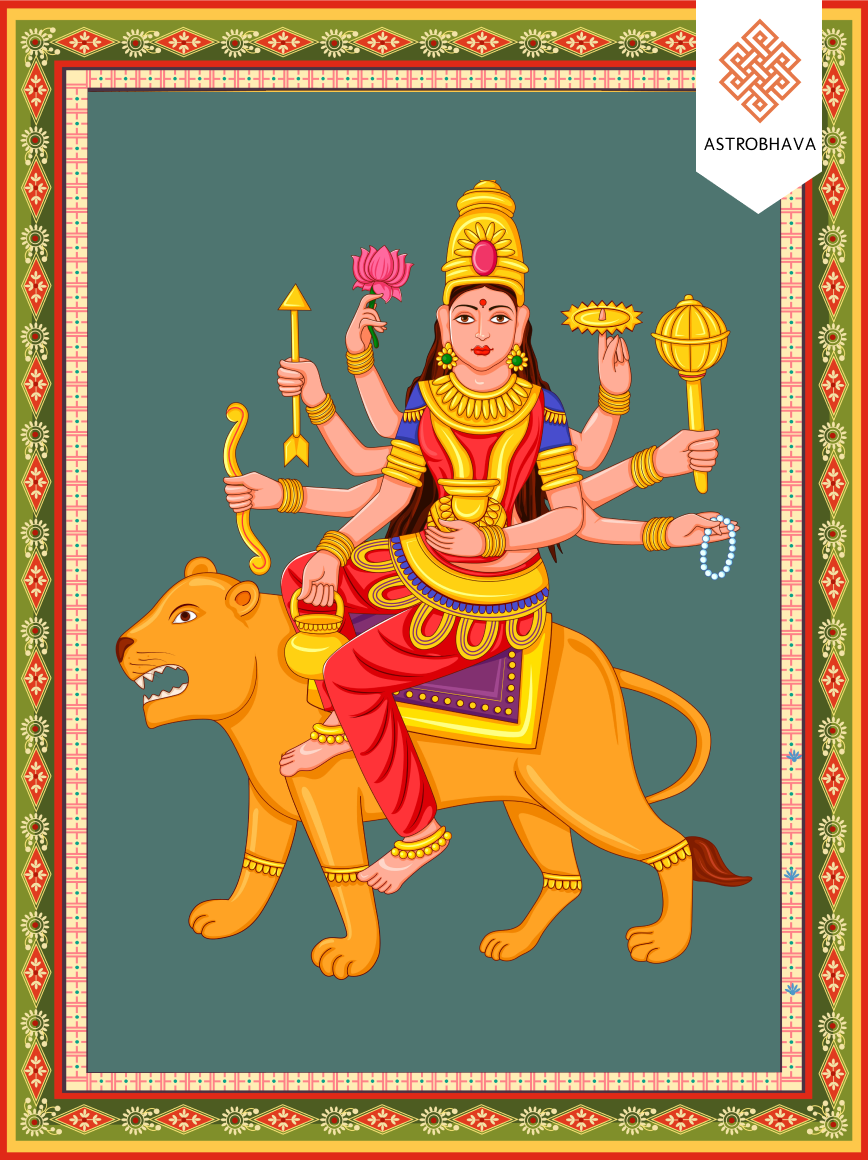
सुरासम्पूर्णकलशं रुधिराप्लुतमेव च । दधाना हस्तपद्माभ्यां कूष्माण्डा शुभदास्तु मे ॥ ॐ देवी कूष्माण्डायै नमः ॥ May Kushmanda, who holds in her lotus hands the vessel brimming with nectar and the vessel of blood, be a giver of all that is auspicious to me — salutations to Goddess Kushmanda.
Why Devotees Book This
The kushmanda homa benefits described in tradition all circle one theme: the return of strength. These are the reasons devotees write to us.
Recovery after illness
Offered when the fever has passed but the strength has not come back — after surgery, a long treatment, or a hospital stay.
Relief sought from chronic complaints
Families undertake this rite for ailments that have lingered for years, alongside the medical care they are already receiving.
Vitality and appetite
Kushmanda is invoked as the source of pranic warmth — the rite is traditionally offered for digestive fire, energy and restful sleep.
Longevity for elders
A common reason for booking: children performing the homa in a parent's name, for ayush and for peaceful years ahead.
Strength of mind through treatment
Illness wears down the spirit before the body. The homa is offered for courage, calm and clarity while a course of treatment runs.
Obstacles clearing around health
Delayed diagnoses, treatments that keep getting postponed, care that never quite falls into place — the homa is offered for that path to open.
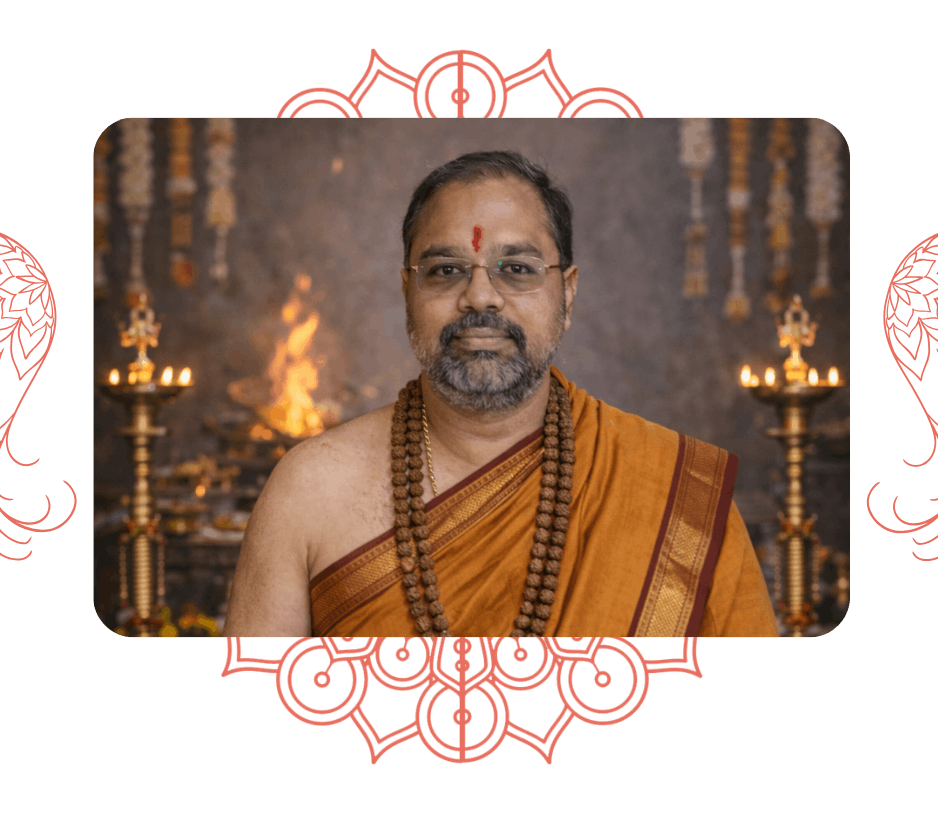
Brahmashree ShivaayaGuru, Head of Astrological & Spiritual Solutions
Who performs your homa
Under the guidance of Brahmashree Shivaaya
Every priest who performs your Kushmanda Homa is trained in a traditional Padashala and personally recruited by Brahmashree Shivaaya — Guru and Head of Astrological & Spiritual Solutions at AstroBhava. Your ritual is conducted at our own Yagna Ashram — never a rented venue — with temple rites performed across our seven temples in Tamil Nadu and Kerala.
Step 2 Enhance with the 48-Day Anushthan? (optional)
* Copper yantra plate approx. 1–2 inches, rolled and sealed inside a silver amulet approx. 2–4 inches. Sizes are approximate and the amulet's design varies between supplier batches — shape, metal and consecration remain the same.
Your packageTrayi Kushmanda Homa3 Priests + Free Yantra
—
All prices are all-inclusive — no shipping charges, no additions at checkout. See everything included →
1
You book — and send birth details at checkout.
2
Within 24–48 working hours — your muhurta is confirmed by email.
3
The day before — your telecast link arrives by email.
4
After the homa — tracking email with your personal time to wear the yantra.
Sacred Timing
Our panchanga scholars fix the muhurat for your homa. These are the occasions most sought for Kushmanda.
Chaturthi of Navaratri
The fourth day of Sharada and Vasanta Navaratri belongs to Kushmanda. The single most sought date for this homa.
Ashwini and Revati nakshatras
The healing stars, presided over by the Ashwini Kumaras and Pushan, are favoured for rites offered for the body's recovery.
Sunday and Tuesday, Shukla Paksha
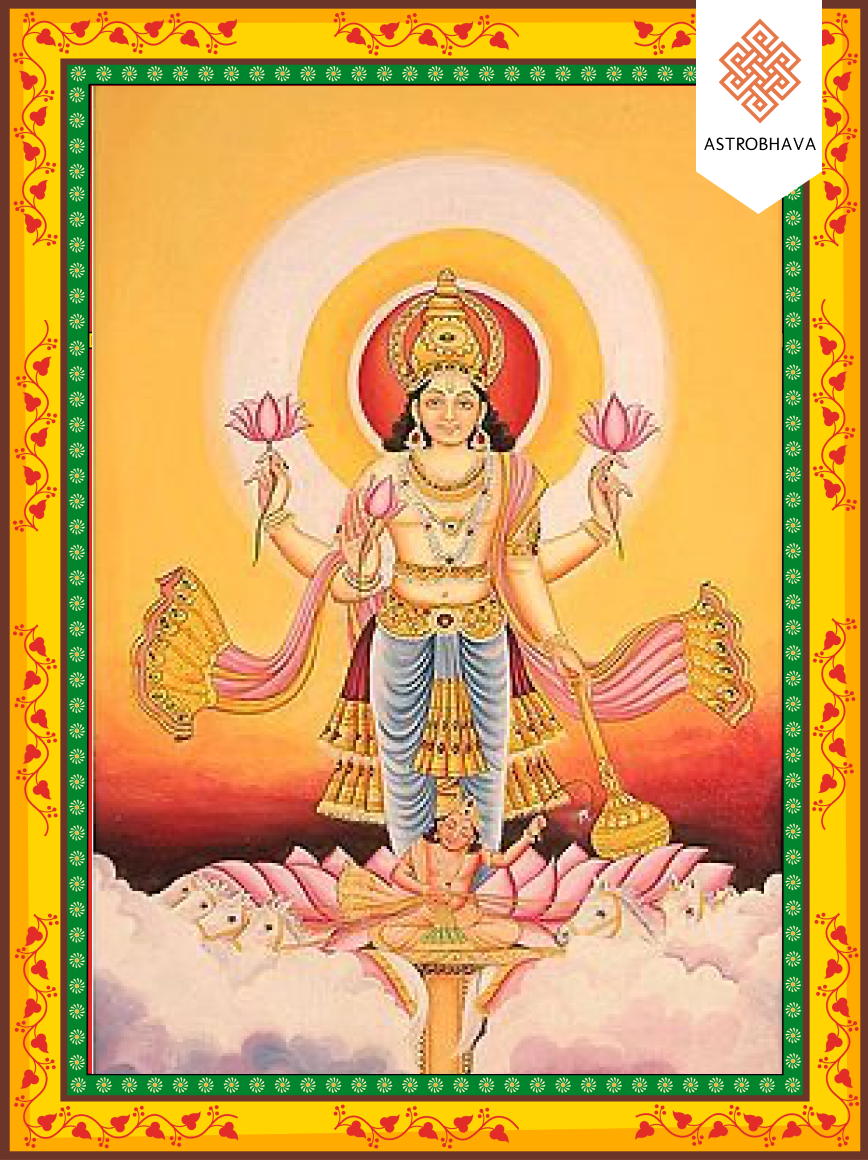
Solar and Mangala days in the waxing fortnight are chosen for kindling vitality and for building strength.
Sankranti and birth nakshatra
Many devotees fix the homa on the beneficiary's own birth star each year, or at Sankranti, as an annual offering for ayush.
Every package, and the 48-day option
What you receive
The sealing of the yantra
When your homa concludes, the yantra that stood in the fire is rolled and locked inside its silver amulet according to Agama vidhi — the practice by which the energies raised in a ritual are held within a consecrated object rather than dispersing. It is why a homa performed at our ashram can still reach a devotee ten thousand miles away: what the fire raised travels to you, sealed.
Personal sankalpa
Your name, gotra & nakshatra — for you and up to five family members.
Live telecast
Watch your own homa in real time from the ashram. Streamed openly on our YouTube channel by default — or request a private, unlisted telecast at checkout.
Free energised Kushmanda Yantra, sealed in a silver amulet
Consecrated over three days — Jala (holy-water consecration with mantras), Prana (life force through pranayama & chants) and Jeeva Pratishta (awakened with 108 recitations & offerings) — then present through your homa, receiving the energies raised in the fire. Immediately afterwards it is rolled and sealed inside a silver amulet by Agamic rite, locking those energies within, and shipped to you with your prasadam.
Prasadam, shipped free
Sacred vibhuti, sandalwood powder & kumkum from your fire — delivered to any country.
48-Day Anushthan (optional)
Daily temple worship for 48 days — the 27 Nakshatras + 12 Rashis + 9 Planets — then sealed in a silver amulet of approximately 2–4 inches.
A note on sacred tradition
As per strict Agama vidhi, no videography is permitted inside the temple sanctum — this preserves the pure sacred energies and undisturbed divine focus of the ritual. The main homa is respectfully telecast live from outside the sanctum; the daily rituals of the 48-day Anushthan are performed with full devotion but are not telecast.
Homas are telecast openly on our YouTube channel so that devotees everywhere may witness the rituals — and because we believe you should be able to see our work before you trust us with yours. Your sankalpa names you and your family, so if you would rather your ceremony were not public, choose the private telecast option at checkout and it is streamed as an unlisted link visible only to you.
We state this plainly — transparency about what tradition forbids filming, and about what is public, is part of performing these rituals honestly.
After it arrives
How to wear your energised Kushmanda Yantra
The energised yantra is carefully rolled and sealed inside a sacred silver amulet before shipping. Wearing it is itself a small ritual — and even its timing is set for you personally.
01
Your auspicious time to wear it
Our astrologer marks the auspicious date and time to wear the yantra according to your birth details — sent to you in the email carrying your shipment's tracking number.
02
Purify the amulet
Dip the silver amulet in raw milk or Ganga jal for an hour before wearing, then clean with normal water.
03
Face East or North
Perform the wearing process facing east or north for maximum benefit.
04
Offer dheep & dhoop
Show lamp and incense to the amulet before wearing it.
05
Wear it
Around your neck or waist, on a thread or chain.
06
Keep the energy intact
Repeated offering of dheep and dhoop keeps the energisation alive.
07
If you prefer not to wear it
Place the amulet at your puja altar, or keep it in your wallet.
Inside the fire ritual
How your Kushmanda Homa is performed
01
Sankalpa
The priest states your name, gotra and nakshatra — and those of up to five family members — with the intention this homa is performed for.
02
Ganapati Puja
The customary invocation to Ganapati, clearing obstacles before the goddess is approached.
03
Agni Pratishtha
The fire is consecrated in the homa kunda and Agni invoked as the carrier of every offering that follows.
04
Kushmanda Avahana
The Kushmanda Sukta and Kushmanda Gayatri are chanted, inviting the goddess's presence into the fire — by one, three or five priests as your package sets.
05
Ahuti
Ghee, white flowers, akshata and honey are offered in sequence with mantra — the offerings traditional to her worship.
06
Purnahuti
The final complete offering seals the sankalpa stated at the opening.
07
Aarti & Dispatch
Aarti is performed live on your telecast. Vibhuti, sandalwood powder, kumkum and your energised yantra are then packed and shipped free to your door.
Who is invoked
Kushmanda — the goddess of knowledge itself
Kushmanda is one of the Tridevi and the mother of the Vedas — the presiding deity of knowledge, learning, memory, speech, music and every art. She is depicted in white upon a white lotus, holding the veena, a book, a rosary and a water pot, with the swan of discernment beside her.
In this homa, her grace — Kushmanda Kataksham — is invoked through fire with your own name and birth details spoken in the sankalpa.
Sarathi, our free AI ritual guide, recommends the traditional ritual for your situation instantly. For a full reading of your chart, book a live session with our astrologers — the fee is fully credited when you book any ritual.
The Kushmanda Homa is a Vedic fire ritual offered to Goddess Kushmanda, the fourth form of Durga. Ghee, herbs, grain and the ash gourd are offered into a consecrated fire while her mantra is chanted. In the Health tradition it is undertaken for recovery from illness, vitality and long life.
Kushmanda Devi is the fourth of the Navadurgas, worshipped on the fourth day of Navaratri. Tradition holds that she dwelt in the darkness before creation and that her gentle smile brought the sun into being. She is depicted with eight arms, seated on a lion, holding a kamandalu, bow, arrow, lotus, discus, mace, japamala and a pot of amrita.
Kushmanda means the ash gourd, or white pumpkin — the fruit offered to this goddess and the substance from which the classical rasayana is made. The name is also read as ku-ushma-anda, 'the little cosmic egg of warmth', pointing to her as the source of the heat that sustains life.
A homa is worship offered through fire. Agni is invoked in a kunda built to prescribed measure, a deity is installed in that fire, and offerings are made with mantra so that the fire carries them to the deity. It is one of the oldest continuous forms of Vedic worship and is the core of every rite AstroBhava performs.
Kushmanda rasayana is a classical Ayurvedic preparation in which ash gourd pulp is cooked down with ghee, jaggery and spices such as pippali, cardamom and cumin until it thickens. It is a medicinal formulation, not a home remedy — please have it prepared or prescribed by a qualified Ayurvedic physician, who will judge the dose and suitability for you. The homa is a separate, devotional offering.
A small homa at home follows the same skeleton: a clean space, a kunda or brick hearth, sankalpa, invocation of Agni, offerings of ghee and samidha with mantra, and purnahuti. But a deity-specific rite like the Kushmanda Homa needs correct kunda measure, the prescribed count of ahutis and trained pronunciation. That is why devotees ask our priests to perform it on their behalf at the Yagna Ashram and watch the fire live from home.
It is the fire worship of the goddess who is described as the origin of solar warmth. Its significance lies there: the rite is offered to rekindle the body's own heat, digestion and endurance. Families undertake it when someone is convalescing, when an ailment has become long-standing, or when they wish to place an elder's health under her care.
Tradition prescribes this homa for recovery of strength after illness, for vitality and appetite, for longevity, for steadiness of mind through a course of treatment, and for the clearing of obstacles that stand in the way of proper care. It is a devotional support offered alongside medical treatment, never in place of it, and no outcome is promised.
Anyone recovering from illness, living with a chronic complaint, or seeking strength and long life for themselves or a family member. Children often book it in a parent's name, and parents in a child's. The homa is performed on your behalf by our priests — you need only give your name, birth star and gotra when known.
Chaturthi of Navaratri is the foremost day. Ashwini and Revati nakshatras, Sundays and Tuesdays in the waxing fortnight, and the beneficiary's own birth star are also favoured. Our panchanga scholars fix the muhurat once you book and tell you the date and hour in your own time zone.
Priests begin with achamana, Ganapati puja and the sankalpa taken in your name and gotra. Kalasha sthapana and navagraha prayers follow. Agni is invoked in the kunda, Kushmanda is installed in the fire, and ahutis are offered with her mantra. Samagri includes cow ghee, palasha and other samidha, ash gourd, rice, honey, red flowers, sesame, navadhanya and herbal dravyas. The rite closes with purnahuti, aarti, pradakshina and blessings spoken in your name.
Book online from any country on this page. Send the name, birth star and gotra of the person the homa is for. We confirm the muhurat, share the live stream link so you can watch the fire from wherever you are, and courier the prasadam and an energised yantra to your address worldwide at no extra cost.